The financial services landscape has undergone a seismic shift in the past decade, driven by digital transformation, real-time payment ecosystems, and an increasingly sophisticated array of financial crime tactics. In this environment, traditional Anti-Money Laundering (AML) frameworks—once anchored by static rule engines and manual review—struggle to keep pace with the velocity and complexity of illicit flows. Enter AI driven AML detection, a paradigm that leverages machine learning, deep learning, and advanced analytics to identify patterns, flag anomalies, and prioritize investigations with unprecedented precision. This article explores how intelligent technologies are reshaping compliance, the mechanics behind modern platforms, and the strategic considerations firms must weigh when adopting AI-powered safeguards.
At the heart of the transition from legacy systems to intelligent monitoring lies a fundamental limitation of rule-based architectures: they are inherently reactive. A typical rule might trigger when a transaction exceeds a fixed threshold or when a customer's activity deviates from a simple historical average. While effective for known typologies, such approaches generate a deluge of false positives—often exceeding 90% in some institutions—diverting valuable analyst time from genuine threats. AI driven AML detection addresses this gap by learning from historical data, adapting to evolving behaviors, and surfacing risk signals that remain invisible to deterministic logic.
The Evolution of AML Compliance in the Digital Age
Traditional Rule-Based Systems and Their Limitations
Legacy AML platforms were designed during an era when transaction volumes were modest and criminal methodologies relatively predictable. Rule engines operate on if-then logic, such as "flag if daily withdrawal limit is exceeded by 50%." While transparent and auditable, these systems lack the nuance to detect complex schemes like layering, smurfing, or trade-based money laundering. Moreover, regulators expect institutions to maintain a robust audit trail, a requirement that rule-based logs can satisfy, but at the cost of operational efficiency.
The Rise of Synthetic Identity Fraud and Modern Money Laundering Tactics
Criminals have adapted by exploiting gaps between siloed data sources and static monitoring thresholds. Synthetic identities—combinations of real and fabricated information—can pass initial Know Your Customer (KYC) checks and subsequently engage in slow-building, high-value transactions. Trade-based laundering manipulates invoices and shipping documents across borders, while crypto-enabled mixing services obfuscate on-chain trails. These tactics demand a shift from static thresholds to dynamic, context-aware risk scoring, a domain where AI driven AML detection excels.
AI driven AML detection: How Machine Learning Redefines Risk Identification
The promise of AI driven AML detection rests on its ability to process vast, multidimensional datasets in real time. Unlike traditional systems that evaluate each transaction in isolation, machine learning models can correlate events across accounts, geographies, product types, and even external intelligence feeds. This holistic view enables the identification of subtle, coordinated patterns that signal money laundering, terrorist financing, or sanctions evasion.
Supervised Learning for Pattern Recognition
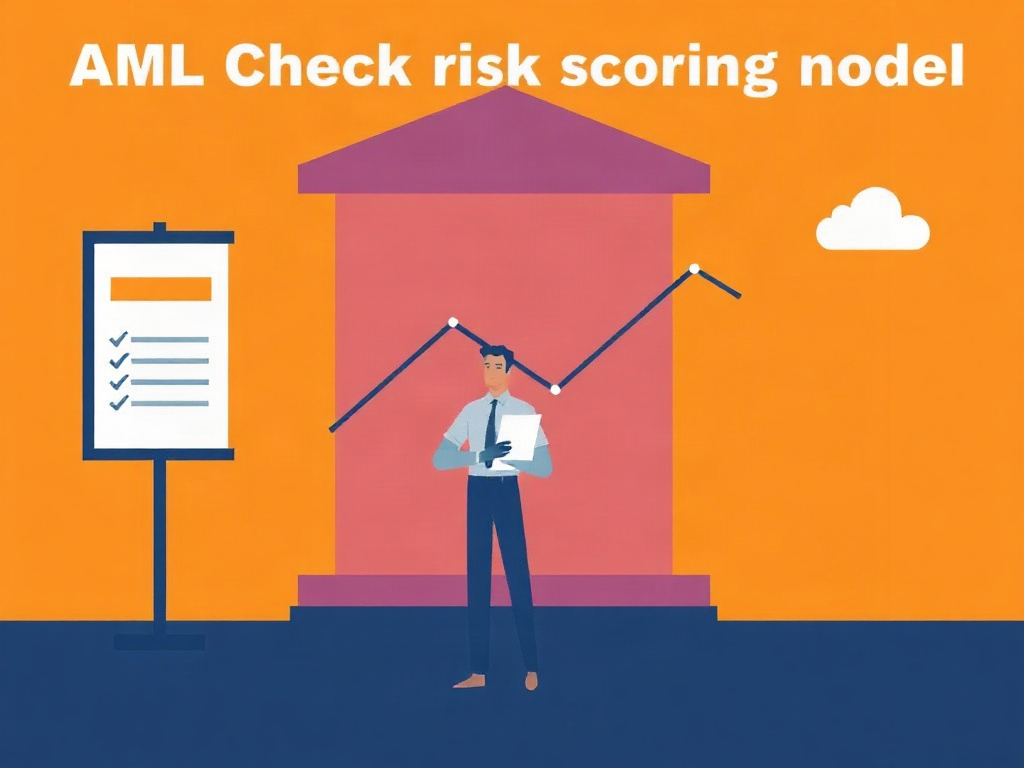
Supervised learning techniques train on labeled datasets comprising both legitimate and illicit transaction histories. Algorithms such as gradient boosting machines, random forests, and logistic regression learn feature importance—perhaps flagging the frequency of round-number transfers, rapid account turnover, or structuring patterns—and assign a risk score to new observations. The model's output is not a binary flag but a probability, allowing compliance teams to prioritize cases based on predicted severity. When continuously retrained with fresh SAR (Suspicious Activity Report) outcomes, these models evolve alongside emerging threats.
Unsupervised Learning for Anomaly Detection
Unsupervised approaches, including clustering algorithms like DBSCAN and autoencoder neural networks, excel when labeled data is scarce or when novel fraud patterns emerge without historical precedents. By modeling the normal behavior of a customer base, these techniques flag deviations—such as an sudden international wire from a previously dormant account—as anomalous. Crucially, unsupervised models can surface "unknown unknowns," prompting investigators to explore new typologies before they scale. Hybrid frameworks that combine supervised and unsupervised learning are increasingly becoming the industry standard for robust AI driven AML detection.
Core Technologies Enabling Smarter AML Solutions
Natural Language Processing for Transaction Narratives
A significant portion of AML intelligence resides in unstructured text: payment references, beneficiary memos, invoice descriptions, and customer onboarding forms. Natural Language Processing (NLP) techniques, particularly transformer-based models, can extract entities, detect sentiment anomalies, and identify semantic links between seemingly unrelated transactions. For instance, an NLP system might recognize that multiple payments to "consulting firms" in different countries share identical wording, suggesting a shell network. Integrating NLP with transaction monitoring enriches the risk context and reduces reliance on structured data alone.
Graph Analytics and Network Analysis
Money laundering often operates through intricate webs of entities, accounts, and intermediaries. Graph analytics visualizes these relationships, revealing central nodes, circular money flows, and indirect ownership structures that linear dashboards miss. By applying centrality measures and community detection algorithms, AI driven AML detection can uncover hidden connections—such as a beneficiary company that appears in multiple ostensibly unrelated investigations. This capability is particularly valuable for combating organized crime rings and syndicate-based laundering operations.
Benefits, Implementation Challenges, and the Path Forward
Reduced False Positives, Improved Efficiency
One of the most immediate advantages of transitioning to AI driven AML detection is the substantial reduction in false positive rates. Institutions report decreases of 30% to 50% in alert volumes within the first year of deployment, freeing analysts to focus on high-fidelity cases. This efficiency gain translates directly into cost savings, as each investigated case incurs labor, technology, and regulatory overhead. Furthermore, faster cycle times improve the timeliness of SAR submissions, strengthening the institution's regulatory posture.
Data Privacy, Model Explainability, and Regulatory Acceptance
Despite the clear benefits, adopting AI in AML is not without challenges. Regulatory bodies such as the FATF, FinCEN, and the EU's EBA emphasize the need for model transparency and auditability. "Black box" algorithms that cannot be explained to auditors or supervisors risk rejection during supervisory reviews. Firms must therefore prioritize explainable AI (XAI) techniques—such as SHAP values, feature importance profiling, and counterfactual analysis—to demonstrate how a risk score was derived. Additionally, data governance frameworks must ensure compliance with privacy regulations like GDPR and CCPA, particularly when integrating third-party data enrichments.
Model Monitoring and Continuous Retraining
Financial crime dynamics are not static; what works today may become obsolete tomorrow. A model trained on data from 2020 will likely miss current structuring techniques or crypto-mixing patterns. Continuous monitoring frameworks track drift in prediction distributions, alerting model owners when performance degrades beyond acceptable thresholds. Periodic retraining cycles, fueled by newly filed SARs and updated typology intelligence, ensure that AI driven AML detection remains both relevant and effective over the long term.
Human-AI Collaboration
The most successful implementations position AI as a force multiplier rather than a replacement for human expertise. Analysts benefit from prioritized case lists, contextual risk scores, and suggested investigation paths generated by the model. In turn, human feedback closes the loop, labeling false positives and true positives that refine the next iteration of the algorithm. This symbiotic relationship enhances detection accuracy while preserving the irreplaceable judgment, intuition, and regulatory knowledge that only seasoned compliance professionals possess.
As financial institutions navigate an increasingly complex compliance landscape, the strategic integration of AI driven AML detection is no longer a futuristic aspiration—it is a operational imperative. By moving beyond static thresholds and embracing adaptive, learning-based systems, firms can achieve higher detection rates, lower operational costs, and a stronger defense against evolving financial crime threats. The journey requires investment in technology, governance, and talent, but the return on investment is measured not only in avoided fines and reputational protection, but in the restoration of trust within the global financial system.
In the years ahead, we can expect further convergence of AI with emerging fields such as federated learning, privacy-preserving computation, and decentralized identity. These innovations promise to extend the reach of AML analytics while respecting data sovereignty and client confidentiality. For forward-thinking compliance leaders, the question is no longer whether to adopt AI driven AML detection, but how quickly and thoughtfully they can integrate it into their broader risk management ecosystem.
- Machine learning models adapt to evolving money laundering typologies in real time.
- Natural language processing extracts actionable insights from unstructured transaction data.
- Graph analytics reveals hidden networks and indirect ownership structures.
- Explainable AI ensures regulatory compliance and auditability.
- Human-AI collaboration optimizes analyst productivity and decision quality.
- Assess current rule-based infrastructure and identify high-volume, low-signal alert categories.
- Pilot a supervised learning model on a defined portfolio, measuring false positive reduction and case quality improvements.
- Integrate NLP and graph analytics to enrich transaction context and uncover network-based risks.
- Establish a model monitoring framework with drift detection and quarterly retraining cycles.
- Foster cross-functional collaboration between compliance, data science, legal, and IT teams to sustain long-term value.
Ultimately, the successful deployment of AI driven AML detection hinges on a balanced approach that marries technological innovation with regulatory prudence, operational discipline, and human oversight. As the financial sector continues its digital evolution, those who harness the power of intelligent detection will not only safeguard their institutions but also contribute to the integrity of the global money flow.

The Rise of AI driven AML detection in Cryptocurrency Compliance
As James Richardson, a senior crypto market analyst with more than twelve years of experience dissecting blockchain ecosystems and institutional adoption patterns, I've watched compliance technology evolve from manual reporting to sophisticated data analytics. The emergence of AI driven AML detection is not just a technical upgrade; it's a strategic necessity for an industry increasingly scrutinized by global regulators. In a space where transparency must balance with decentralization, intelligent systems offer a way to uphold integrity without stifling innovation.
From a practical standpoint, AI powered solutions excel at processing vast volumes of on-chain data in real time, identifying subtle deviations from normal behavior that would otherwise go unnoticed by conventional rule-based filters. These models learn from historical fraud patterns, adapt to new wallet morphing techniques, and reduce the false-positive rates that have long plagued compliance teams. Moreover, integrating such tools with existing KYC/AML frameworks allows analysts like myself to focus on high-risk signals rather than sifting through noise, ultimately improving both efficiency and detection accuracy.
Looking forward, the convergence of machine learning, behavioral analytics, and regulatory technology will define the next era of crypto market safety. For institutions seeking to enter or expand within the digital asset space, investing in AI driven AML detection is no longer optional—it's a cornerstone of risk management and market credibility. As the technology matures, I anticipate a future where compliance is proactive, predictive, and seamlessly woven into the fabric of blockchain operations.