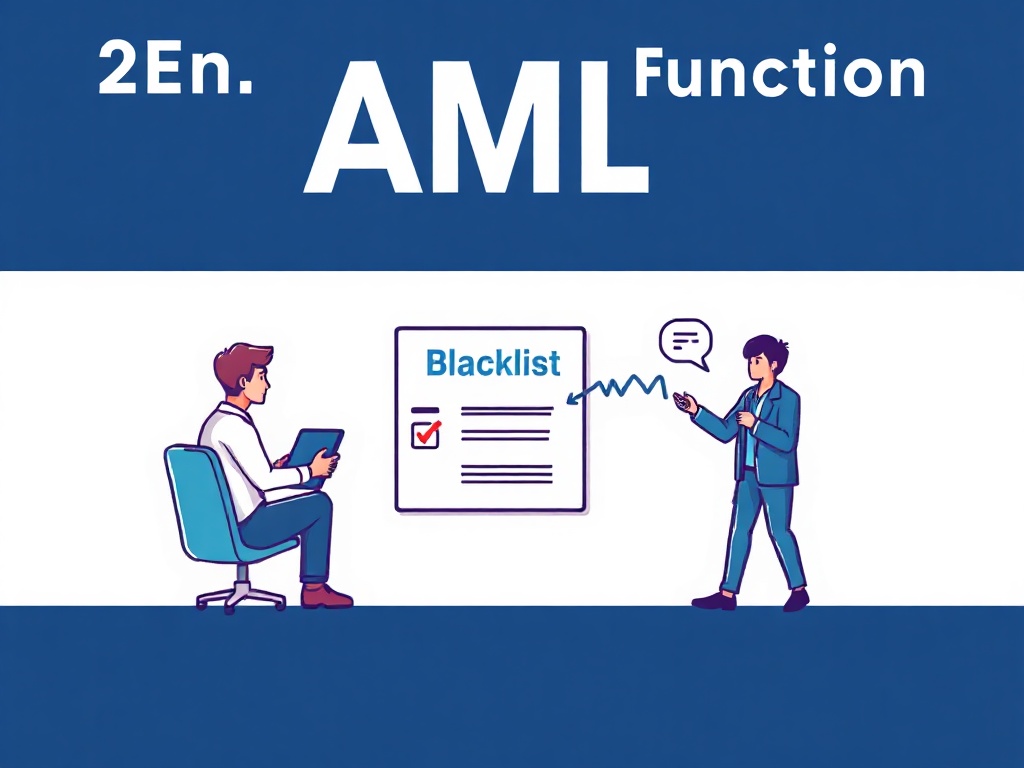
Understanding the AML Check Blacklist Function Smart Contract
The AML check blacklist function smart contract is a specialized piece of code deployed on blockchain platforms to automate the detection and prevention of transactions involving sanctioned entities, high-risk individuals, or prohibited activities. This function acts as a digital gatekeeper, ensuring that all transactions adhere to anti-money laundering (AML) regulations by cross-referencing transaction details against a predefined blacklist. The integration of this function into smart contracts is a game-changer for financial institutions, cryptocurrency exchanges, and decentralized finance (DeFi) platforms, as it enables real-time compliance without manual intervention.
What Exactly Does the AML Check Blacklist Function Smart Contract Do?
At its core, the AML check blacklist function smart contract is designed to perform two primary tasks: first, it verifies whether a transaction involves parties or addresses listed in a blacklist, and second, it enforces rules to block or flag such transactions. This is achieved through a series of conditional statements and data queries embedded within the smart contract. For instance, when a user initiates a transaction, the smart contract automatically checks the sender’s and receiver’s addresses against the blacklist. If a match is found, the transaction is either halted or marked for further review, depending on the contract’s configuration.
- Real-time monitoring: The function operates continuously, ensuring compliance without delays.
- Automated enforcement: It eliminates the need for human oversight in flagging suspicious activities.
- Scalability: Smart contracts can handle thousands of transactions per second, making them ideal for high-volume platforms.
The Role of Blacklists in AML Compliance
Blacklists are essential tools in AML frameworks, as they contain information about entities or individuals deemed risky. The AML check blacklist function smart contract leverages these lists to maintain a proactive stance against financial crimes. However, the effectiveness of this function depends on the quality and timeliness of the blacklist data. Outdated or incomplete blacklists can lead to false negatives, where malicious transactions go undetected. Therefore, integrating dynamic data sources, such as government sanctions lists or third-party compliance databases, is crucial for maintaining accuracy.
Technical Implementation of the AML Check Blacklist Function Smart Contract
Deploying the AML check blacklist function smart contract requires a deep understanding of blockchain architecture and smart contract programming. Developers typically use languages like Solidity for Ethereum-based contracts or Rust for Solana. The implementation process involves several key steps, including defining the blacklist data structure, setting up query mechanisms, and establishing response protocols for flagged transactions.
Data Structure and Storage Mechanisms
The blacklist data is usually stored in a decentralized manner to ensure accessibility and security. Common approaches include:
- On-chain storage: The blacklist is embedded directly into the smart contract, which can be efficient but may lead to high gas costs for frequent updates.
- Off-chain storage with oracles: External databases or APIs are used to store the blacklist, and oracles fetch the latest data when needed. This method is more scalable but requires reliable third-party services.
- Hybrid models: A combination of on-chain and off-chain storage balances flexibility and cost-efficiency.
For example, a AML check blacklist function smart contract might store sanctioned addresses in a mapping data structure, where each address is a key-value pair. When a transaction occurs, the contract queries this mapping to check for matches. This approach ensures that the blacklist is always up-to-date, provided the data source is reliable.
Integration with Blockchain Protocols
The AML check blacklist function smart contract must be seamlessly integrated with the underlying blockchain protocol. This involves aligning the contract’s logic with the protocol’s transaction validation process. For instance, in Ethereum, the contract would interact with the Ethereum Virtual Machine (EVM) to execute its checks during transaction execution. Similarly, in a proof-of-stake (PoS) network like Cardano, the contract would operate within the native scripting language of the platform.
One of the challenges in this integration is ensuring that the AML check blacklist function smart contract does not introduce latency. Since blockchain transactions are irreversible, any delay in the compliance check could result in unintended transfers. To mitigate this, developers optimize the contract’s code for speed and efficiency, often using techniques like batch processing or parallel query execution.
Real-Time Monitoring and Alerts
A critical feature of the AML check blacklist function smart contract is its ability to provide real-time monitoring. This is achieved through continuous execution of the compliance checks during each transaction. When a match is detected, the contract can trigger alerts to the platform’s compliance team or automatically block the transaction. The real-time aspect is particularly vital for high-risk environments, such as cryptocurrency exchanges, where the volume of transactions is massive and the risk of fraud is high.
To enhance this functionality, the contract can be designed to log all flagged transactions in a secure, immutable ledger. This not only aids in auditing but also helps in identifying patterns of suspicious activity. For example, if multiple transactions involving a single address are flagged, the system can escalate the case for further investigation.
Challenges and Limitations of the AML Check Blacklist Function Smart Contract
While the AML check blacklist function smart contract offers significant benefits, it is not without challenges. These limitations can impact its effectiveness and adoption across different platforms.
Data Accuracy and Maintenance
One of the primary challenges is maintaining an accurate and up-to-date blacklist. Blacklists are frequently updated by regulatory bodies, and any delay in incorporating these changes can render the AML check blacklist function smart contract ineffective. For instance, if a sanctioned entity is removed from the blacklist but the contract still recognizes it as high-risk, legitimate transactions could be blocked unnecessarily. Conversely, if a malicious entity is not on the blacklist, the contract may fail to detect their activities.
To address this, developers often implement automated data synchronization mechanisms. However, these systems require robust infrastructure and continuous monitoring to ensure reliability. Additionally, the use of decentralized oracles can help in fetching real-time data, but they introduce dependency on third-party services, which may have their own vulnerabilities.
False Positives and Negatives
Another significant issue is the occurrence of false positives and negatives. A false positive occurs when a legitimate transaction is incorrectly flagged as suspicious, leading to unnecessary blocks or delays. A false negative, on the other hand, happens when a malicious transaction goes undetected. Both scenarios can have serious consequences, including loss of user trust and regulatory penalties.
The AML check blacklist function smart contract must be designed with advanced algorithms to minimize these errors. For example, incorporating machine learning models to analyze transaction patterns can improve accuracy. However, integrating such models into a smart contract requires careful consideration of computational resources and security risks.
Scalability and Performance
As blockchain networks grow, the AML check blacklist function smart contract must scale efficiently to handle increasing transaction volumes. However, the computational complexity of checking against a large blacklist can lead to performance bottlenecks. For instance, a contract that checks every transaction against a blacklist of millions of addresses may experience delays, especially during peak times.
To overcome this, developers can optimize the contract’s code by using efficient data structures, such as hash tables or bloom filters, which allow for faster lookups. Additionally, offloading some of the processing to external servers or using layer-2 solutions can help distribute the load and improve overall performance.
Use Cases and Applications of the AML Check Blacklist Function Smart Contract
The AML check blacklist function smart contract has a wide range of applications across various industries. Its ability to automate compliance checks makes it a valuable tool for financial institutions, cryptocurrency exchanges, and DeFi platforms.
Cryptocurrency Exchanges
Cryptocurrency exchanges are prime candidates for deploying the AML check blacklist function smart contract. These platforms handle a vast number of transactions daily, making them vulnerable to money laundering and fraud. By integrating the function into their smart contracts, exchanges can automatically screen users and transactions, ensuring compliance with global AML regulations such as the Financial Action Task Force (FATF) guidelines.
For example, when a user attempts to deposit funds into an exchange, the smart contract checks the user’s address against the blacklist. If a match is found, the transaction is either blocked or flagged for manual review. This not only reduces the risk of illicit activities but also streamlines the onboarding process for legitimate users.
DeFi Platforms
Decentralized finance (DeFi) platforms operate on a permissionless model, which can make them attractive to malicious actors. The AML check blacklist function smart contract can be embedded into DeFi protocols to monitor lending, borrowing, and trading activities. This ensures that users do not interact with sanctioned entities or engage in high-risk transactions.
One notable use case is in decentralized lending platforms, where the smart contract checks the borrower’s address before approving a loan. If the address is on the blacklist, the loan request is rejected. This proactive approach helps in maintaining the integrity of the DeFi ecosystem while adhering to regulatory requirements.
Financial Institutions
Traditional financial institutions, such as banks and credit unions, can also benefit from the AML check blacklist function smart contract. These institutions often deal with cross-border transactions, which are more prone to AML risks. By deploying the function into their internal systems or blockchain-based platforms, they can automate compliance checks and reduce the burden on their compliance teams.
For instance, a bank using a blockchain-based payment system can integrate the smart contract to verify the legitimacy of each transaction. This not only enhances security but also ensures that the bank remains compliant with local and international AML laws.
Future Trends and Innovations in the AML Check Blacklist Function Smart Contract
The AML check blacklist function smart contract is poised for significant advancements as blockchain technology and regulatory frameworks evolve. These innovations will further enhance its capabilities and expand its applicability.
Integration with Artificial Intelligence
One of the most promising trends is the integration of artificial intelligence (AI) with the AML check blacklist function smart contract. AI algorithms can analyze vast amounts of transaction data to identify patterns that may indicate money laundering or fraud. By combining AI with the smart contract’s blacklist checks, platforms can achieve a higher level of accuracy and adaptability.
For example, an AI model could learn to recognize suspicious transaction behaviors, such as rapid transfers between multiple addresses or large volumes of funds moving through obscure channels. The smart contract could then use these insights to refine its blacklist checks, reducing false positives and improving overall compliance.
Decentralized Blacklist Management
Currently, blacklists are often managed by centralized authorities, which can lead to delays and potential biases. The future may see the emergence of decentralized blacklist management systems, where multiple stakeholders contribute to maintaining the list. This approach would ensure transparency, reduce the risk of manipulation, and allow for real-time updates.
In such a system, the AML check blacklist function smart contract could interact with a decentralized autonomous organization (DAO) or a blockchain-based governance framework to update the blacklist. This would not only make the process more democratic but also ensure that the blacklist reflects the latest regulatory requirements.
Cross-Chain Compliance
As blockchain ecosystems become more interconnected, the need for cross-chain compliance solutions will grow. The AML check blacklist function smart contract will need to be adapted to work across multiple blockchain networks. This requires the development of standardized protocols and interoperability solutions that allow the contract to access and verify blacklist data from different chains.
For instance, a user transferring funds from Ethereum to Binance Smart Chain would require the smart contract to check both chains’ blacklists. This level of integration would be complex but essential for ensuring comprehensive compliance in a multi-chain environment.
Conclusion
The AML check blacklist function smart contract is a vital tool for ensuring compliance and security in the blockchain space. By automating the detection of high-risk transactions, it helps organizations mitigate the risks associated with money laundering and fraud. However, its effectiveness depends on factors such as data accuracy, scalability, and the integration of advanced technologies. As the blockchain industry continues to grow, the AML check blacklist function smart contract will play an increasingly important role in shaping a safer and more regulated financial ecosystem.
While challenges remain, ongoing innovations in AI, decentralized systems, and cross-chain interoperability are likely to address many of these issues. For businesses and developers, understanding and implementing the AML check blacklist function smart contract is not just a regulatory requirement but a strategic move toward building trust and resilience in the digital economy.

AML Check Blacklist Function Smart Contract: A Critical Component in Decentralized Finance Compliance
As a DeFi & Web3 Analyst, I’ve observed that the integration of AML check blacklist functions within smart contracts is a pivotal development for ensuring compliance in decentralized ecosystems. Traditional AML frameworks often struggle with the borderless and pseudonymous nature of DeFi, where transactions can occur across multiple chains and protocols without centralized oversight. A smart contract-based AML check blacklist function addresses this by embedding real-time compliance checks directly into the protocol’s logic. This allows for automated flagging of transactions involving sanctioned addresses, high-risk entities, or illicit patterns, which is essential for platforms aiming to align with global regulatory standards. The practicality of such a function lies in its ability to operate without intermediaries, reducing latency and human error while maintaining transparency. However, the effectiveness of this approach hinges on the accuracy and timeliness of the blacklist data itself. If the blacklist is outdated or poorly maintained, it could either fail to detect threats or inadvertently block legitimate users, creating friction in the user experience. Therefore, the design of these smart contracts must prioritize dynamic updates and robust data sources to remain viable in a rapidly evolving landscape.
The technical implementation of an AML check blacklist function smart contract requires careful consideration of both security and scalability. From my experience, these contracts often rely on off-chain data feeds or oracle integrations to verify addresses against a blacklist. This introduces potential points of failure, such as oracle manipulation or data latency, which could compromise the integrity of the compliance checks. Additionally, the computational cost of running these checks on-chain must be balanced against the need for real-time responsiveness. For instance, a poorly optimized contract might slow down transaction processing, deterring users or increasing gas fees. Another practical insight is the need for modularity—allowing protocols to customize their blacklist criteria based on jurisdictional requirements or risk tolerance. This flexibility is crucial as regulatory landscapes vary globally. However, it also raises questions about centralization risks. If a single entity controls the blacklist data, it could become a single point of failure or a target for manipulation. Thus, while the AML check blacklist function smart contract offers a powerful tool for compliance, its success depends on a combination of technical rigor, data integrity, and decentralized governance to mitigate these risks.