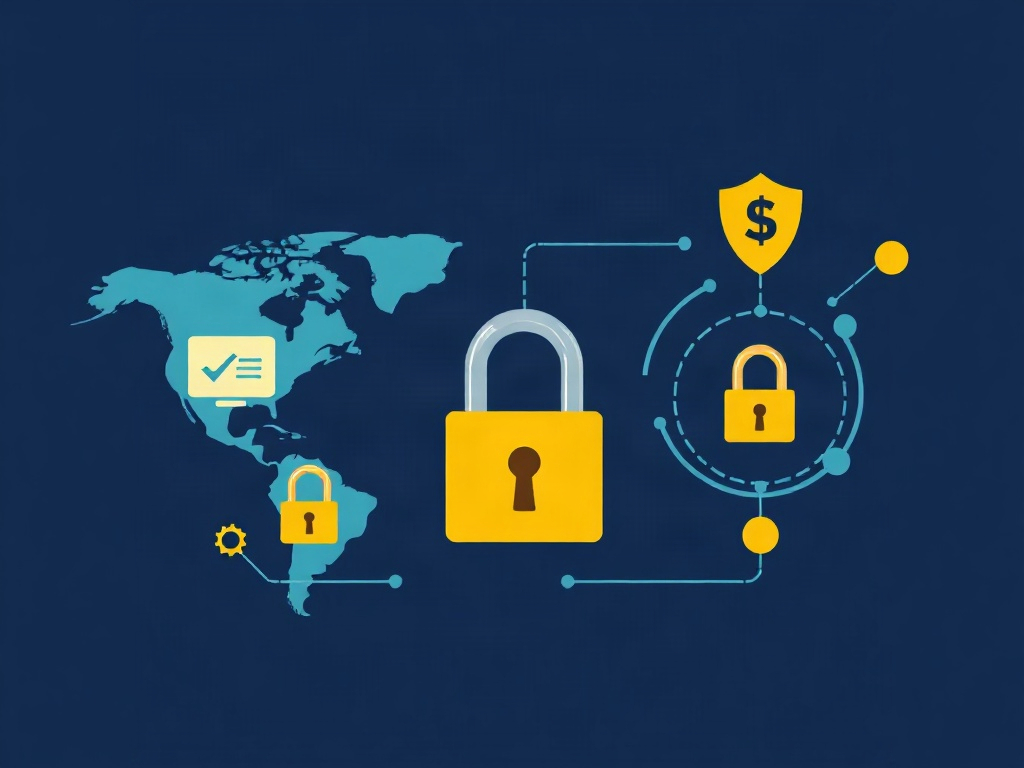
In today’s rapidly evolving financial landscape, the intersection of regulatory oversight and data protection has become a critical focal point for institutions worldwide. The demand for robust anti-money laundering (AML) mechanisms coexisting with stringent privacy obligations has given rise to a sophisticated engineering challenge: AML check compliant privacy protocol design. This discipline requires a delicate balance—ensuring that transaction monitoring, customer due diligence, and suspicious activity reporting meet legal thresholds while simultaneously safeguarding sensitive personal information from unauthorized exposure. As global regulators tighten scrutiny and cyber threats grow in complexity, organizations must adopt protocol architectures that are both resilient and privacy-preserving.
The foundation of any effective AML check compliant privacy protocol design rests on a clear understanding of the regulatory ecosystem. Jurisdictions such as the European Union’s Fifth Anti-Money Laundering Directive (5AMLD), the U.S. Bank Secrecy Act, and the Financial Action Task Force (FATF) recommendations each impose distinct obligations on financial entities. These frameworks mandate the collection, retention, and sharing of customer data to detect and prevent illicit flows, yet they also emphasize the principle of data minimization. Navigating this paradox is the first step toward a protocol that is both compliant and privacy-conscious.
Core Pillars of Privacy-Preserving AML Protocols
Data Minimization and Purpose Limitation
At the heart of AML check compliant privacy protocol design lies the principle of data minimization. Financial institutions must collect only the information strictly necessary for AML purposes and retain it for the shortest duration required by law. This approach not only reduces the attack surface for potential breaches but also aligns with global privacy regulations such as the General Data Protection Regulation (GDPR). By implementing strict purpose limitation, organizations ensure that data gathered for transaction monitoring cannot be repurposed for unrelated commercial activities, thereby maintaining user trust and regulatory alignment.
Cryptographic Foundations for Secure Data Handling
Modern protocol design leverages advanced cryptography to enable AML checks without exposing raw customer data. Techniques such as homomorphic encryption, zero-knowledge proofs, and secure multi-party computation allow institutions to validate patterns and detect anomalies in encrypted datasets. These methods empower AML check compliant privacy protocol design to perform meaningful risk assessments while keeping individual records obscured. For instance, a zero-knowledge proof can confirm that a customer’s transaction volume exceeds a threshold without revealing the exact amounts or the customer’s identity, thereby preserving privacy during the compliance check.
Access Control and Role-Based Governance
Technical safeguards must be complemented by rigorous administrative controls. Role-based access control (RBAC) frameworks define who within the organization can view, process, or transmit AML-related data. Coupled with audit trails and immutable logging, these mechanisms create a transparent accountability structure. In the context of AML check compliant privacy protocol design, access policies should enforce the principle of least privilege, ensuring that analysts and automated systems only interact with the minimal data necessary for their specific compliance tasks.
Integrating AML Checks into Privacy-Centric Workflows
Real-Time Monitoring Without Data Exposure
Real-time transaction monitoring is a cornerstone of effective AML programs, but traditional approaches often involve centralizing vast amounts of unprocessed data in a single repository. Privacy-preserving alternatives distribute the analytical load across decentralized nodes, each performing localized checks before aggregating results in an anonymized format. This architecture supports AML check compliant privacy protocol design by enabling immediate flagging of suspicious activity while preventing the consolidation of personally identifiable information (PII) in vulnerable environments.
Federated Learning for Pattern Detection
Emerging technologies such as federated learning (FL) offer a paradigm shift in how AML patterns are identified. In an FL setup, each participant trains a model on its local dataset and shares only model updates, not the underlying data. This approach allows institutions to collectively improve detection accuracy across a network without compromising individual customer privacy. By incorporating federated learning, AML check compliant privacy protocol design can harness the power of big data analytics while respecting the contractual and legal boundaries that govern customer information.
Auditability and Regulatory Reporting
One of the most challenging aspects of privacy-enhanced AML protocols is maintaining the ability to produce accurate regulatory reports. Auditors and regulators require verifiable evidence of compliance actions, including the rationale behind transaction flags and the data sources consulted. Advanced protocol designs incorporate cryptographic audit logs that provide proof of processing without exposing sensitive details. These logs can be selectively disclosed to regulators under strict confidentiality agreements, ensuring that AML check compliant privacy protocol design meets both operational transparency and privacy mandates.
Technical Architecture for Compliant Privacy Protocols
Layered Protocol Stack
A robust AML check compliant privacy protocol design typically employs a layered architecture. The foundational layer handles secure data ingestion and encryption, the middle layer performs analytical computations on encrypted or pseudonymized data, and the top layer manages regulatory reporting and user interface interactions. Each layer is designed with specific privacy controls, such as tokenization at the ingestion point, secure computation in the analytical layer, and selective disclosure mechanisms at the reporting layer. This separation of concerns ensures that a vulnerability or misconfiguration in one layer does not compromise the entire system’s privacy posture.
Interoperability with Existing AML Systems
Financial institutions often operate legacy AML platforms that were not built with privacy-by-design principles. Integrating new privacy-preserving protocols with these systems requires careful orchestration. Middleware solutions can act as translators, converting data formats and applying privacy transformations before data enters the legacy system. Alternatively, a phased migration approach allows institutions to incrementally replace non-compliant components with privacy-enhanced alternatives, reducing operational disruption while advancing toward a more secure framework.
Scalability and Performance Considerations
Privacy-enhancing technologies often introduce computational overhead, which can impact the speed and scalability of AML operations. Effective AML check compliant privacy protocol design must address this trade-off through optimization techniques such as algorithmic efficiency improvements, hardware acceleration, and edge computing. By distributing processing tasks across a network of edge devices, institutions can maintain real-time monitoring capabilities without sacrificing privacy guarantees, ensuring that the protocol remains both performant and compliant as transaction volumes grow.
Best Practices and Implementation Roadmap
Stakeholder Engagement and Cross-Functional Collaboration
 Robert Hayes
DeFi & Web3 Analyst
Robert Hayes
DeFi & Web3 Analyst
AML Check Compliant Privacy Protocol Design: Navigating Regulatory Requirements Without Sacrificing User Confidentiality
As a technology researcher immersed in DeFi and Web3 infrastructure, I've watched the tension between anti-money laundering mandates and privacy-preserving architectures evolve from a niche concern to a central pillar of protocol viability. The design of AML check compliant privacy protocol design isn't merely a technical afterthought; it's a strategic enabler that determines whether a protocol can attract institutional capital while retaining the pseudonymous ethos that underpins decentralized finance. In practice, this means engineering systems that can validate user risk profiles and transaction integrity without exposing sensitive on-chain activity to public scrutiny.
Practical implementation demands a modular approach, often leveraging zero-knowledge proofs and secure multiparty computation to verify compliance signals off-chain or in trusted execution environments before finality. I've found that the most effective designs decouple the compliance layer from the core transaction logic, allowing jurisdictions to plug in region-specific AML rules without forcing a full protocol rewrite. This reduces developer overhead and minimizes friction for legitimate users, while still closing the loopholes that malicious actors exploit. The key is balancing cryptographic rigor with operational feasibility, ensuring that compliance checks don't become a bottleneck for high-throughput trading or liquidity provision.
Looking ahead, the protocols that will endure are those that treat AML check compliant privacy protocol design as a foundational design principle from day one, rather than a retroactive patch. For developers and investors alike, the ability to discern which projects have integrated privacy with regulatory foresight will be the differentiator between sustainable growth and regulatory shutdown. As the Web3 landscape matures, the most resilient frameworks will be those that transparently communicate their compliance mechanisms, uphold user privacy where possible, and adapt swiftly to evolving global standards—all without compromising the decentralized core that makes these protocols valuable in the first place.