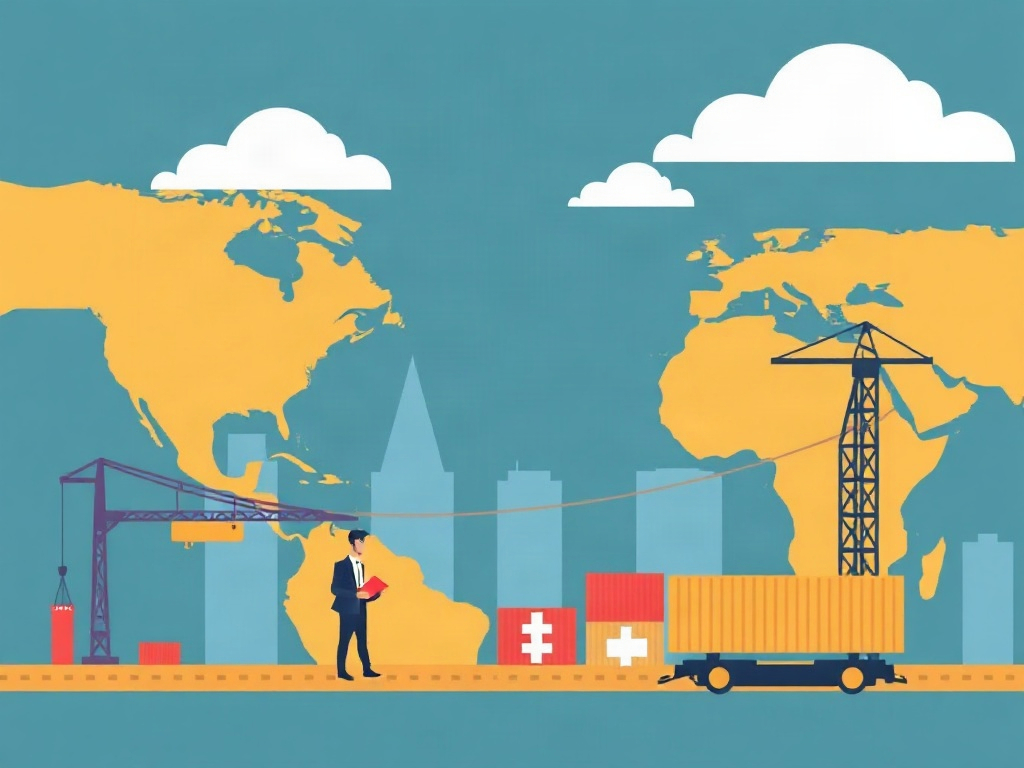
The rapid expansion of global trade has positioned free trade zones (FTZs) as critical hubs for logistics, manufacturing, and distribution. While these zones offer significant economic advantages—such as reduced tariffs, streamlined customs procedures, and operational flexibility—they also present unique challenges for anti-money laundering (AML) compliance. The intersection of high-volume cross-border movement, diverse corporate structures, and varying regulatory oversight creates an environment where AML check free trade zone company risk becomes a paramount concern for financial institutions, regulators, and compliance professionals. Understanding the nuances of this risk is not merely a regulatory checkbox; it is a strategic imperative that protects institutions from reputational damage, legal penalties, and exploitation by illicit actors.
Free trade zones are often designed to facilitate trade efficiency, but their very design can inadvertently create vulnerabilities. Companies operating within these zones may benefit from simplified licensing, tax incentives, and reduced reporting requirements. However, these same benefits can be exploited to obscure beneficial ownership, funnel illicit funds, or conduct transactions without adequate scrutiny. The result is a heightened AML check free trade zone company risk profile that requires tailored assessment methodologies, robust internal controls, and continuous monitoring to mitigate effectively.
The Landscape of Free Trade Zones and AML Vulnerabilities
Operational Characteristics That Amplify Risk
Free trade zones vary widely in their governance, size, and regulatory focus. Some are small, single-industry parks, while others are massive, multi-sector economic corridors. This diversity means that AML check free trade zone company risk cannot be addressed with a one-size-fits-all approach. Zones that handle high volumes of cargo, facilitate re-export operations, or host numerous foreign-owned entities often present a larger attack surface for money laundering activities. The lack of uniform beneficial ownership disclosure requirements across different jurisdictions further complicates efforts to trace the true origin of funds.
Common Red Flags in FTZ Operations
- Frequent changes in corporate directors or shareholders without clear business justification.
- Use of shell companies or nominee arrangements to mask beneficial ownership.
- High-frequency, low-value transactions that do not align with the company’s stated business model.
- Inconsistent or missing documentation for cross-border shipments.
- Relationships with entities located in high-risk jurisdictions or designated AML blacklists.
The Role of Regulatory Gaps
Regulatory gaps often exist between the FTZ’s internal governance and the broader national AML framework. In some regions, the FTZ authority oversees operational compliance, while AML responsibilities fall to financial intelligence units or central banks. This fragmentation can lead to overlaps or, more commonly, blind spots. When an AML check free trade zone company risk assessment fails to bridge these regulatory divides, companies may operate under the assumption that their FTZ status provides immunity from scrutiny, a misconception that enforcement agencies are increasingly challenging.
Core Components of an Effective AML Check for Free Trade Zone Entities
Beneficial Ownership Verification
One of the foundational elements of any AML check free trade zone company risk assessment is the verification of beneficial ownership. FTZ companies frequently use complex corporate structures involving multiple layers of holding companies, trusts, or intermediaries. Compliance teams must employ thorough due diligence techniques, including cross-referencing commercial registers, conducting site visits where feasible, and leveraging third-party data sources to uncover the natural persons who ultimately control the entity. Without this step, subsequent transaction monitoring efforts lack a critical reference point.
Customer Due Diligence (CDD) and Enhanced Due Diligence (EDD)
Standard customer due diligence procedures must be adapted to the FTZ context. For entities with significant foreign ownership or those engaged in high-risk sectors such as precious metals, diamonds, or bulk commodities, enhanced due diligence is essential. This includes obtaining detailed information on the source of funds, the purpose of the FTZ operation, and the expected nature of transactions. EDD also involves ongoing monitoring of politically exposed persons (PEPs) and sanctions list matches, ensuring that the company’s FTZ status is not used as a conduit for sanctioned entities.
Transaction Monitoring Tailored to FTZ Patterns
Transaction monitoring systems must be calibrated to recognize the typical patterns of legitimate FTZ activity while flagging anomalies. For instance, a sudden increase in the volume of re-exports, transactions involving jurisdictions with weak AML frameworks, or payments to entities lacking a clear commercial relationship should trigger alerts. Integrating rule-based monitoring with machine learning models can improve the detection of subtle, complex schemes that traditional thresholds might miss. The goal is to reduce false positives while ensuring that genuine AML check free trade zone company risk indicators are not overlooked.
Risk Assessment Methodologies: Identifying Red Flags in Trade Zone Operations
Geographic Risk Mapping
Geographic risk mapping is a critical tool for assessing AML check free trade zone company risk. Compliance professionals should map the FTZ’s primary trading partners, identifying which regions present higher money laundering threats. Factors such as weak regulatory enforcement, high levels of corruption, or significant cash-based economies should increase the scrutiny applied to transactions involving those jurisdictions. A geographic risk-based approach allows firms to allocate resources more efficiently, focusing enhanced monitoring on high-risk corridors while maintaining standard oversight for low-risk partners.
Sector-Specific Risk Analysis
Different industries operating within FTZs face distinct AML risks. For example, companies involved in logistics and warehousing may be vulnerable to cargo fraud or the use of legitimate shipments to transport illicit goods. Manufacturing entities might face risks related to the sourcing of raw materials from high-risk regions or the use of front companies. A sector-specific risk analysis evaluates the inherent vulnerabilities of each business activity within the FTZ and tailors the AML framework accordingly. This targeted approach ensures that compliance efforts are proportionate to the actual risk exposure.
Time-Based and Pattern Analysis
Analyzing transaction patterns over time can reveal indicative behaviors of money laundering. Sudden spikes in activity, structuring transactions to avoid reporting thresholds, or a shift in the types of goods or services traded can all signal underlying risks. Compliance teams should conduct regular trend analysis, comparing current data against historical baselines established for the specific FTZ entity. This longitudinal perspective helps in identifying gradual shifts in risk posture that might otherwise go unnoticed in real-time monitoring.
Regulatory Frameworks and Global Standards for AML in Free Trade Zones
International Standards and Best Practices
Global standard-setting bodies such as the Financial Action Task Force (FATF) provide guidance that directly impacts how AML check free trade zone company risk should be managed. The FATF Recommendations emphasize the importance of risk-based approaches, beneficial ownership transparency, and international cooperation. FTZ operators and their compliance partners should align their policies with these standards, ensuring that their frameworks are not only legally compliant but also consistent with global expectations. Adherence to international standards also facilitates smoother cross-border information sharing and mutual recognition of compliance efforts.
National Regulations and FTZ-Specific Guidelines
Many countries have enacted specific regulations governing their free trade zones, often incorporating AML requirements into broader financial crime legislation. These national frameworks may mandate periodic risk assessments

Navigating AML check free trade zone company risk in the Crypto Asset Era
As James Richardson, a senior crypto market analyst with more than twelve years of experience in digital asset valuation and blockchain risk assessment, I have observed a growing convergence between traditional free trade zone structures and the rapidly evolving cryptocurrency ecosystem. These jurisdictions offer unparalleled operational efficiency for entities seeking to bridge fiat and digital asset flows, yet they also introduce a distinct compliance calculus. The AML check free trade zone company risk is not a peripheral concern; it sits at the intersection of jurisdictional leniency and the pseudonymous nature of on-chain transactions, requiring a heightened level of scrutiny from both regulators and market participants.
From a practical risk management perspective, the AML check free trade zone company risk directly influences counterparty valuation, liquidity assessment, and the long-term viability of crypto-focused projects operating within these zones. In my recent due diligence engagements, I have found that institutions must move beyond surface-level licensing checks and integrate real-time on-chain monitoring with traditional AML frameworks. The divergence between static regulatory approvals and dynamic blockchain activity creates a risk gap that, if unaddressed, can result in enforcement penalties, reputational damage, and unexpected liquidity shocks for institutional portfolios.
Looking forward, I advise clients to treat the AML check free trade zone company risk as a living variable, one that evolves alongside regulatory developments and tracing technology. A hybrid compliance model—combining jurisdictional AML protocols with AI-driven on-chain analytics—provides the most resilient shield against emerging threats. Ultimately, the firms that institutionalize these layered risk controls will not only protect their assets but also cement their credibility in a market where trust, transparency, and regulatory alignment are the primary differentiators.