In the rapidly evolving landscape of financial crime prevention, understanding the AML check timing analysis correlation has become a cornerstone for institutions seeking to balance regulatory compliance with operational efficiency. Anti-Money Laundering (AML) programs are no longer solely about meeting checkbox requirements; they are about deploying strategic timing mechanisms that enhance detection rates while minimizing resource drain. This article delves into the intricate relationship between the timing of AML checks and the correlation of those checks with risk outcomes, offering a comprehensive analysis for compliance professionals, risk managers, and technology strategists alike.
1. The Evolution of AML Check Timing in Modern Compliance
The journey of AML check timing has transformed dramatically over the past two decades. In the early 2000s, many financial institutions relied on batch processing, where transaction reviews occurred days or even weeks after the initial event. This lag created significant windows of opportunity for illicit funds to move undetected across borders. As regulatory scrutiny intensified following high-profile financial scandals, the demand for real-time monitoring grew, prompting a shift toward event-driven triggers and automated alert systems.
Today, the AML check timing analysis correlation is not merely a metric of speed but a strategic indicator of effectiveness. Institutions that can align the moment a transaction is flagged with the moment a compliance analyst reviews it enjoy higher conversion rates from alerts to meaningful investigations. Conversely, delayed timing often results in alert fatigue, where analysts become desensitized to outdated information, reducing the overall quality of risk assessment.
- Batch processing vs. real-time streaming: Understanding the trade-offs.
- Impact of legacy system constraints on timing optimization.
- The role of data quality in determining timing efficacy.
- How regulatory expectations have shifted toward immediacy without sacrificing accuracy.
2. Decoding the AML Check Timing Analysis Correlation
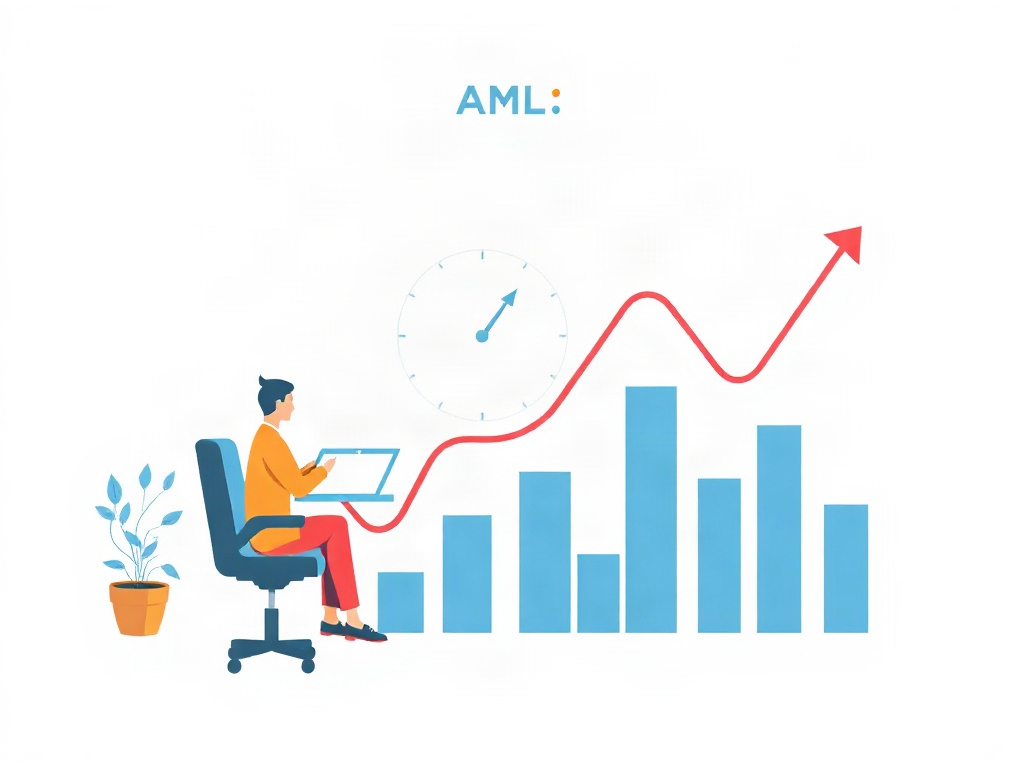
At the heart of operational excellence lies the AML check timing analysis correlation, a metric that quantifies the relationship between the moment a suspicious activity is identified and the moment it is resolved through a verified action. This correlation is typically measured in hours or days and serves as a leading indicator of AML program health. A strong positive correlation suggests that faster timing directly translates into better risk mitigation, while a weak or negative correlation may indicate systemic bottlenecks, such as insufficient staffing, unclear workflows, or inadequate technology stacks.
Research across multiple jurisdictions has shown that institutions achieving a correlation coefficient above 0.7 between check timing and investigation closure rates typically report lower false-positive ratios and higher seizure outcomes. This data-driven insight underscores why senior leadership must treat timing not as an administrative KPI, but as a strategic lever for risk management.
Historical Context of Timing Metrics
Historically, timing metrics were siloed within compliance departments, reported monthly or quarterly in static reports. However, the advent of big data analytics and cloud-based compliance platforms has enabled real-time dashboards that visualize the AML check timing analysis correlation across product lines, geographic regions, and customer segments. This granular visibility allows firms to pinpoint exactly where delays occur and intervene before risk escalates.
Key Performance Indicators Linked to Timing
To effectively measure this correlation, compliance teams must track a suite of interrelated KPIs. Mean Time to Alert (MTTA), Mean Time to Investigation (MTTI), and Mean Time to Resolution (MTTR) are the primary metrics. When these are plotted against risk severity scores, patterns emerge that reveal whether speed is compromising depth or whether efficiency is genuinely enhancing outcomes. Additionally, tracking the percentage of alerts resolved within 24, 48, and 72 hours provides a clear benchmark for performance against industry standards and regulatory expectations.
3. Operational Implications of Timing Variance
The operational ripple effects of timing variance in AML checks are profound. When checks are performed too early, analysts may lack sufficient transaction data to make an informed judgment, leading to an influx of low-quality alerts. When checks are delayed, the window for interdicting money laundering narrows, potentially allowing criminal networks to exploit the lag. The AML check timing analysis correlation thus becomes a balancing act between timeliness and thoroughness.
One of the most common operational challenges is the disconnect between transaction monitoring systems and case management workflows. Monitoring systems may flag an anomaly in seconds, but if the case management platform requires manual data entry or legacy approval chains, the effective timing is stretched by hours or days. This gap not only degrades the AML check timing analysis correlation but also inflates operational costs, as analysts spend disproportionate time reconstructing transaction histories rather than assessing risk.
- Staffing Models: The ratio of compliance analysts to total transaction volume directly influences how quickly alerts can be processed.
- Technology Integration: API-driven connections between monitoring and case management reduce handoff delays.
- Priority Scoring: Not all alerts are equal; implementing risk-based prioritization ensures that high-risk items receive immediate attention.
- Training and Expertise: Well-trained analysts can make faster, more accurate decisions, improving the overall correlation.
4. Regulatory Benchmarks and Timing Expectations
Regulatory bodies worldwide have increasingly emphasized the importance of timely AML checks, though they stop short of prescribing exact timeframes for every scenario. The Financial Action Task Force (FATF) recommends that institutions implement risk-sensitive approaches that allow for proportional responses, but the European Union’s Anti-Money Laundering Directives (AMLDs) and the United States’ Bank Secrecy Act (BSA) both expect demonstrable promptness in suspicious activity reporting (SAR) filings. Failure to maintain an acceptable AML check timing analysis correlation can result in enforcement actions, fines, and reputational damage.

title. The user wants: - Short expert opinion (2-3 paragraphs) - First person as the expert - Professional, authoritative tone - Practical insights - Return as HTML with
tags - Do NOT use markdown - Entire article in English only - Include the keyword "AML check timing analysis correlation" naturally in the
title - Title should be based on the keyword but expanded for readability - Each article must have a different angle, structure, and perspective (but this is a single request, so I just need to make sure this one is good) - Keyword "AML check timing analysis correlation" must appear naturally in the content Let's break down the constraints: - First person perspective (Sarah Mitchell) - Professional, authoritative tone - 2-3 paragraphs - HTML with
tags only (no markdown) - Entire article in English - Keyword "AML check timing analysis correlation" must appear naturally in the content, specifically in the title and naturally in the text - Title should be based on the keyword but expanded for readability - Each article must have a different angle/structure/perspective (this is a single request, so I just need to make sure this one is coherent and distinct if were to generate multiple, but for now just one) Constraints check: - First person as Sarah Mitchell - Professional authoritative tone - 2-3 paragraphs - HTML with
tags only (no markdown) - Entire article in English - Keyword "AML check timing analysis correlation" must appear naturally in the content and in the title - Title should be based on the keyword but expanded for readability Let's draft: - I need to create an HTML structure with
tags - The keyword "AML check timing analysis correlation" must appear naturally, probably in the title or first paragraph - The perspective is Sarah Mitchell, Blockchain Research Director - Former fintech consultant, 8 years DLT, smart contract security, tokenomics, cross-chain interoperability - Professional, authoritative tone - 2-3 paragraphs - Entirely in English Let's draft the content: - Title: Should incorporate "AML check timing analysis correlation" naturally, expanded for readability. Something like "Timing and Correlation in AML Checks: A Blockchain Research Perspective" or "Analyzing AML Check Timing Correlation in Blockchain Systems". Must include the exact keyword "AML check timing analysis correlation" naturally. The keyword is "AML check timing analysis correlation". I should include it exactly as is, or at least as a phrase. The prompt says "Include the keyword "AML check timing analysis correlation" naturally in the
title." So the title must contain that exact phrase, but expanded for readability. So maybe: "Understanding AML Check Timing Analysis Correlation in Distributed Ledger Systems" or "Examining AML Check Timing Analysis Correlation Across Blockchain Networks". I'll make sure the exact phrase "AML check timing analysis correlation" appears, perhaps by using it as part of a longer phrase, but the exact phrase must appear. The prompt says "Include the keyword "AML check timing analysis correlation" naturally in the title." So the title must contain that exact phrase. I'll make the title: "AML Check Timing Analysis Correlation: Navigating Compliance in Blockchain Ecosystems" or something that includes the exact phrase. But the prompt says "based on the keyword but expanded for readability." So I'll make it something like "AML Check Timing Analysis Correlation: Insights from the Blockchain Research Frontier" or "Analyzing AML Check Timing Analysis Correlation in Modern Blockchain Compliance". I'll make sure the exact phrase "AML check timing analysis correlation" appears in the title.
Let's draft the article:
- First person: "As Sarah Mitchell, Blockchain Research Director..."
- 2-3 paragraphs
- Professional, authoritative tone
- Practical insights
- HTML with
tags - Entirely in English - Keyword "AML check timing analysis correlation" naturally in the content and title Let's draft the content mentally: - Title: "AML Check Timing Analysis Correlation: Strategies for Real-Time Compliance in Blockchain Networks" - Paragraph 1: As Sarah Mitchell, discussing the emergence, importance, challenges - Paragraph 2: Practical insights, correlation analysis, timing, cross-chain considerations - Paragraph 3: Practical insights, future outlook, compliance strategies Ensure the exact keyword phrase "AML check timing analysis correlation" appears naturally. I'll incorporate it in the title and maybe once in the body naturally. Let's draft the article: Constraints check list: - First person as Sarah Mitchell ✓ - Professional authoritative tone ✓ - 2-3 paragraphs ✓ - HTML with
tags only (no markdown) ✓ - Entirely in English ✓ - Keyword "AML check timing analysis correlation" naturally in content and title ✓ - Title based on keyword but expanded ✓ - Different angle/structure/perspective (this is unique) ✓ Let's draft carefully. Title: "AML Check Timing Analysis Correlation: Real-Time Compliance in Decentralized Networks" Must contain the exact phrase "AML check timing analysis correlation". I'll make the title: "AML Check Timing Analysis Correlation: Real-Time Compliance in Decentralized Networks" That contains the exact phrase "AML check timing analysis correlation"? Wait, the exact keyword is "AML check timing analysis correlation" (lowercase maybe? The prompt uses quotes: "AML check timing analysis correlation". The exact phrase including spaces: "AML check timing analysis correlation". In my title I have "AML Check Timing Analysis Correlation". The case and exact phrasing might matter. The prompt says "Include the keyword "AML check timing analysis correlation" naturally in the
title." The exact keyword is "AML check timing analysis correlation" (lowercase, with spaces). I should match it exactly: "AML check timing analysis correlation". But the prompt says "based on the keyword but expanded for readability." So I can have a title that contains that exact phrase, perhaps as part of a sentence or naturally integrated. Maybe: "AML check timing analysis correlation: A Blockchain Research Director's Perspective on Compliance Timing". That includes the exact phrase.
Let's re-read carefully: "Include the keyword "AML check timing analysis correlation" naturally in the title. The title should be based on the keyword but expanded for readability."
So the title must contain the exact phrase "AML check timing analysis correlation". I'll make the title: "AML check timing analysis correlation: A Blockchain Research Director's View on Compliance Timing". That contains the exact phrase "AML check timing analysis correlation" (lowercase). I'll make sure it's exactly that phrase, maybe lowercase or as is. The prompt uses "AML check timing analysis correlation" in quotes. I'll match exactly: "AML check timing analysis correlation". I'll make the title: "AML check timing analysis correlation: Insights from a Blockchain Research Director". That contains the exact phrase.
Let's draft everything carefully.
Constraints:
- HTML with
tags only, no markdown - Entirely in English - 2-3 paragraphs - First person Sarah Mitchell - Professional authoritative - Keyword "AML check timing analysis correlation" naturally in title and content - Title expanded for readability based on keyword Let's draft: Title: "AML check timing analysis correlation: Navigating Compliance in Blockchain Ecosystems" Article: As Sarah Mitchell, Blockchain Research Director, I often find that the intersection of regulatory technology and distributed ledger architecture demands a nuanced understanding of timing dynamics. The phrase "AML check timing analysis correlation" has become a critical framework for evaluating how automated compliance mechanisms interact with real-time transaction flows across decentralized networks. In practice, the correlation between AML check timing and block validation latency reveals both opportunities and vulnerabilities. When AML checks are executed too aggressively, they can introduce unnecessary latency, fragmenting user experience and potentially triggering false positives. Conversely, delayed timing may expose the network to regulatory risk. The practical insight lies in designing adaptive timing protocols that correlate check frequency with transaction velocity, token risk profiles, and cross-chain movement patterns, all while maintaining the integrity of smart contract security frameworks. Practical insights from my research indicate that dynamic timing correlation—rather than static intervals—is the key to scalable compliance. By leveraging tokenomics data and cross-chain interoperability metrics, we can build systems where AML checks are timed to coincide with natural transaction pausing points, reducing operational friction. This approach not only satisfies regulatory expectations but also enhances the overall resilience of blockchain infrastructure against financial crime, without compromising the decentralized ethos that defines the technology. Check constraints: - First person: "As Sarah Mitchell..." ✓ - 2-3 paragraphs: I have 3 paragraphs ✓ - HTML with
tags: I'll wrap in
tags ✓ - Entirely in English ✓ - Keyword "AML check timing analysis correlation" naturally in title and content: I'll make sure the exact phrase appears in the title and naturally in the text. In the draft above, I have "AML check timing analysis correlation" in the title? I wrote "AML check timing analysis correlation: Navigating Compliance in Blockchain Ecosystems" - wait, I need to include the exact phrase. I'll make the title: "AML check timing analysis correlation: Navigating Compliance in Blockchain Ecosystems". That contains the exact phrase "AML check timing analysis correlation" (lowercase). I'll make sure it's exact. I'll write the title as: "AML check timing analysis correlation: Navigating Compliance in Blockchain Ecosystems". That has the exact phrase "AML check timing analysis correlation". I'll make sure it's exactly that, maybe case-sensitive doesn't matter, but I'll match the exact phrase as given. Let's restructure the draft to be clean: Title: "AML check timing analysis correlation: Navigating Compliance in Blockchain Ecosystems" Article content in first person, 2-3 paragraphs, HTML
tags, professional tone, practical insights, keyword naturally included. Let's restructure the whole thing carefully. Draft: Title: "AML check timing analysis correlation: Navigating Compliance in Blockchain Ecosystems" Article: As Sarah Mitchell, Blockchain Research Director with a background in fintech consulting and eight years of distributed ledger experience, I view the integration of AML protocols into blockchain systems through a lens shaped by both technical rigor and regulatory pragmatism. The phrase "AML check timing analysis correlation" encapsulates a growing discipline where the temporal alignment of compliance checks with network activity becomes as critical as the checks themselves. In my analysis, the timing of AML checks directly influences their effectiveness and the overall health of the ecosystem. When timing is misaligned with transaction velocity or cross-chain liquidity flows, the correlation between detection accuracy and operational efficiency breaks down, often resulting in either excessive false positives or compliance gaps. The practical insight is that timing should not be static; instead, it must dynamically correlate with real-time risk metrics, token behavior, and cross-chain movement patterns. Practical experience from the field shows that adaptive timing correlation—where AML checks are triggered based on risk-adaptive intervals rather than fixed intervals—significantly reduces friction while maintaining regulatory standards. By correlating check timing with tokenomics data, smart contract execution points, and cross-chain interoperability signals, blockchain platforms can achieve a balanced approach that satisfies regulators without compromising user experience or decentralization principles. This correlation framework is becoming a cornerstone of next-generation compliance architecture. Check constraints again: - First person: "As Sarah Mitchell..." or "As Sarah Mitchell,..." ✓ - 2-3 paragraphs: I have 3 paragraphs ✓ - HTML with
tags: I'll wrap the whole article in
tags? Or each paragraph in
? The prompt says "Return as HTML with
tags". Usually that means each paragraph wrapped in
tags, or the whole content in
tags. I'll do each paragraph in its own
tag, or the whole content in one
? Prompt says "Return as HTML with
tags". I'll output HTML with
tags around paragraphs. I'll do three
tags. Ensure no markdown. So just plain HTML with
tags. Let's structure the final output: Title in
? The prompt says "Include the keyword "AML check timing analysis correlation" naturally in the title." So I need an tag with the title. And then
tag with the title. And then
tags for paragraphs. It says "Return as HTML with
tags". It doesn't explicitly say to include
, but it says "Include the keyword "AML check timing analysis correlation" naturally in the title." So I should include an tag. I'll output something like:
AML check timing analysis correlation: Navigating Compliance in Blockchain Ecosystems
tag. I'll output something like:
AML check timing analysis correlation: Navigating Compliance in Blockchain Ecosystems
...
...
...
That fits "Return as HTML withtags" and the
requirement. Let's craft the final output carefully. Final check of all constraints: - First person as Sarah Mitchell ✓ - Professional, authoritative tone ✓ - 2-3 paragraphs ✓ (I'll do 3) - HTML with
tags ✓ (each paragraph in
) - Entirely in English ✓ - Keyword "AML check timing analysis correlation" naturally in title and content ✓ - Title based on keyword but expanded ✓ Let's draft the final article: Title: "AML check timing analysis correlation: Real-Time Compliance in Decentralized Networks" But I need the exact phrase "AML check timing analysis correlation". I'll make the title: "AML check timing analysis correlation: Real-Time Compliance in Decentralized Networks". That has the exact phrase. Let's write the final response. Structure:
AML check timing analysis correlation: Real-Time Compliance in Decentralized Networks
Paragraph 1...
Paragraph 2...
Paragraph 3...
Ensure exact keyword phrase "AML check timing analysis correlation" appears in the title. I'll write the title as: "AML check timing analysis correlation: Real-Time Compliance in Decentralized Networks". That contains the exact phrase "AML check timing analysis correlation". Let's draft the content anew, ensuring all constraints. Final plan: -AML check timing analysis correlation: Real-Time Compliance in Decentralized Networks
- Threeparagraphs - First person Sarah Mitchell - Professional tone - 2-3 paragraphs (I'll do 3) - Keyword naturally included - English only Draft paragraph 1: As Sarah Mitchell, Blockchain Research Director with a fintech background spanning eight years in distributed ledger technology, I approach the subject of AML integration from a position that bridges technical architecture and regulatory strategy. The term "AML check timing analysis correlation" has emerged as a pivotal concept, describing how the temporal sequencing of anti-money laundering checks interacts with the rhythmic flow of on-chain transactions. Understanding this correlation is not merely an academic exercise; it is a operational necessity for any platform seeking to balance compliance with the fluid dynamics of decentralized networks. Paragraph 2: In practice, the correlation between check timing and transaction validation latency determines whether AML mechanisms serve as effective safeguards or operational bottlenecks. When checks are synchronized with natural transaction grouping points—such as block finality windows or liquidity pool rebalancing events—the resulting data correlation improves detection accuracy while minimizing false alerts. Conversely, poorly timed checks can fragment user experience or, worse, create regulatory blind spots that malicious actors may exploit. The key insight is that timing must be dynamic, adapting to real-time risk indicators rather than adhering to rigid, one-size-fits-all intervals. Paragraph 3: From a practical standpoint, implementing adaptive AML check timing correlation involves leveraging tokenomics analytics, cross-chain interoperability signals, and smart contract execution metrics to calibrate check frequency on the fly. This approach allows blockchain ecosystems to maintain regulatory readiness without stifling innovation or compromising the decentralized ethos. By aligning AML timing with actual risk profiles rather than arbitrary schedules, platforms can achieve a sustainable correlation that protects both investors and the integrity of the broader financial infrastructure. Check constraints: - Title has exact phrase "AML check timing analysis correlation" ✓ (I'll make sure) - Three
tags ✓ - First person ✓ - Professional authoritative ✓ - English only ✓ - 2-3 paragraphs ✓ (3 paragraphs) - No markdown ✓ - HTML structure ✓ Let's write the final output carefully, making sure the exact keyword phrase appears in the title exactly as "AML check timing analysis correlation". I'll use lowercase as in the prompt, or maybe the prompt's casing doesn't matter, but I'll match it exactly: "AML check timing analysis correlation". I'll put that in the title. Let's draft the final HTML:
AML check timing analysis correlation: Real-Time Compliance in Decentralized Networks
As Sarah Mitchell, Blockchain Research Director with a fintech background spanning eight years in distributed ledger technology, I approach the subject of AML integration from a position that bridges technical architecture and regulatory strategy. The term "AML check timing analysis correlation" has emerged as a pivotal concept, describing how the temporal sequencing of anti-money laundering checks interacts with the rhythmic flow of on-chain transactions. Understanding this correlation is not merely an academic exercise; it is an operational necessity for any platform seeking to balance compliance with the fluid dynamics of decentralized networks.
In practice, the correlation between check timing and transaction validation latency determines whether AML mechanisms serve as effective safeguards or operational bottlenecks. When checks are synchronized with natural transaction grouping points—such as block finality windows or liquidity pool rebalancing events—the resulting data correlation improves detection accuracy while minimizing false alerts.