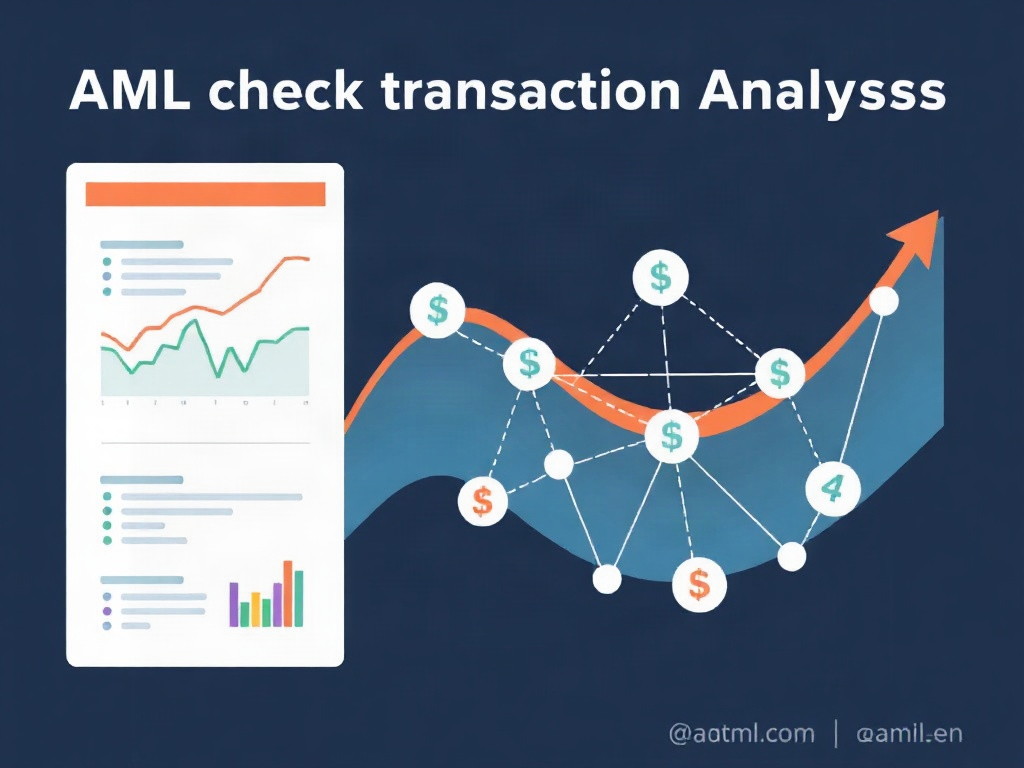
The evolution of financial crime has outpaced many traditional rule-based monitoring systems, prompting a strategic shift toward more adaptive, interconnected analytical frameworks. At the forefront of this transformation is AML check transaction graph analysis, a methodology that leverages graph theory and network science to visualize, quantify, and disrupt illicit money movement across digital ecosystems. Unlike linear transaction sequencing, graph analysis maps the relational ties between accounts, entities, and events, revealing hidden patterns such as layering, structuring, and collusion that would otherwise remain obscured in tabular data. This approach not only enhances detection precision but also reduces false-positive rates, allowing compliance teams to allocate resources toward genuine risk indicators. As regulatory expectations tighten and transaction volumes explode, integrating graph-based intelligence into anti-money laundering (AML) programs is no longer a competitive advantage—it is becoming a operational necessity.
Understanding the Fundamentals of Transaction Graph Analysis
What Is a Transaction Graph?
A transaction graph is a structured representation where nodes represent entities—such as individuals, corporations, wallets, or merchant accounts—and edges represent financial movements, typically annotated with attributes like amount, timestamp, currency, and counterparty. In the context of AML check transaction graph analysis, these graphs are constructed from raw banking feeds, SWIFT messages, crypto on-chain data, and third-party risk signals. The graph structure enables analysts to traverse paths of funds flow, identify circular movements, and detect anomalies based on topological features rather than static thresholds. For instance, a simple round-trip transaction between two accounts might be innocuous in isolation, but within a graph, it can signal a structuring attempt when examined alongside velocity, frequency, and third-party involvement.
Key Components of Effective Graph Modeling
Building a robust graph for AML purposes requires careful attention to data normalization, entity resolution, and edge semantics. Inconsistent naming conventions, missing identifiers, or mismatched timestamps can fragment the graph, reducing its analytical value. Modern platforms employ entity resolution algorithms that fuse records across disparate sources, creating a unified node identity. Additionally, edge attributes are enriched with behavioral metrics—such as transaction velocity, deviation from baseline, and geographic risk scores—to provide context for downstream algorithms. The goal is a dynamic, queryable graph that can be sliced, diced, and traversed in real time, supporting both batch investigations and streaming anomaly detection.
Algorithmic Approaches in AML Graph Analysis
Community Detection and Cluster Analysis
One of the most powerful applications of graph analysis in AML is community detection, which groups nodes that are densely connected while being sparsely connected to the rest of the network. Algorithms such as Louvain, Leiden, and Label Propagation identify potential money mule networks, shell companies, or syndicated fraud rings. In practice, AML check transaction graph analysis using community detection can flag a cluster of accounts that exhibit similar deposit patterns, round-number transfers, and rapid movement across jurisdictions—hallmarks of organized layering. Analysts can then assign risk scores to entire communities, prioritizing cases where multiple red flags converge.
Real-Time Anomaly Scoring
Beyond static clustering, real-time graph traversal enables continuous anomaly scoring as transactions occur. By embedding machine learning models directly into the graph query layer, systems can compute a risk score for each edge based on historical patterns, known typologies, and real-time context. For example, a sudden outbound transfer from a previously dormant account to a high-risk jurisdiction can trigger an immediate alert, with the graph providing the investigative context: source account history, beneficiary network, and suspected routing paths. This capability reduces the time-from-detection-to-action from days to minutes, a critical factor in intercepting fast-moving illicit flows.
Integrating Graph Analysis into Existing AML Frameworks
Data Ingestion and Normalization
Successful implementation of AML check transaction graph analysis begins with a resilient data ingestion pipeline. Financial institutions must aggregate data from core banking systems, payment processors, trade finance platforms, and external watchlists into a unified data lake. The raw data then undergoes cleansing, deduplication, and schema mapping to ensure consistency across the graph. Standardized formats such as ISO 20022 messages facilitate this process, but many organizations also employ ETL (extract, transform, load) frameworks that normalize proprietary formats into a common graph schema. The quality of the input data directly dictates the reliability of graph-derived insights.
Case Management and Investigator Workflow
Graph insights are most impactful when they integrate seamlessly with existing case management systems. Rather than requiring investigators to manually correlate data from multiple screens, graph visualizations can be embedded directly into the UI, highlighting suspicious paths, indicating risk levels, and suggesting next steps. This human-in-the-loop design ensures that analysts can validate algorithmic findings, add narrative context, and file Suspicious Activity Reports (SARs) with confidence. Furthermore, audit trails generated from graph traversals provide a transparent record of how a decision was reached, supporting both internal reviews and regulatory examinations.
Regulatory Alignment and Reporting Advantages
Mapping to FATF and Local Guidelines
Regulatory bodies worldwide, including the Financial Action Task Force (FATF), have increasingly acknowledged the potential of technology-enhanced AML methods. Graph analysis aligns with the risk-based approach advocated by FATF by providing a granular, evidence-based view of money laundering typologies. It enables institutions to demonstrate proactive monitoring, sophisticated pattern recognition, and continuous risk assessment—key expectations in modern AML frameworks. By mapping graph-derived risk metrics to specific regulatory criteria, compliance teams can produce more defensible SARs and reduce the likelihood of supervisory findings related to inadequate monitoring capabilities.
Audit Trails and Explainable AI
One of the persistent challenges in AI-driven AML is the "black box" problem, where automated alerts lack explainability. Graph analysis offers a natural advantage here: every risk score, community assignment, or anomaly flag can be traced back to specific nodes, edges, and traversal paths. This traceability satisfies regulatory demands for transparency and empowers institutions to provide detailed narratives in regulatory submissions. Moreover, explainable graph models allow compliance officers to understand why a particular pattern was flagged, facilitating continuous model refinement and alignment with evolving typologies.
Challenges, Best Practices, and the Road Ahead
Data Quality and Scalability
Despite its promise, deploying AML check transaction graph analysis at scale presents significant hurdles. Data silos, legacy infrastructure, and inconsistent data standards can impede graph construction and traversal performance. Organizations must invest in modern data architecture, including graph databases optimized for high-frequency writes and complex query patterns. Additionally, implementing data governance frameworks that ensure privacy compliance—especially when handling cross-border personal information—is essential. Scalability tests should be conducted regularly to ensure that graph operations remain performant as transaction volumes grow into the millions per day.
Human-in-the-Loop Optimization
Technology alone cannot replace the nuanced judgment of experienced compliance professionals. The most effective AML programs combine graph-powered analytics with human expertise, creating a feedback loop where investigator outcomes inform model retraining and policy updates. Regular tuning of detection thresholds, periodic review of community detection results, and continuous engagement with law enforcement typology updates keep the system aligned with real-world threats. Training programs that familiarize analysts with graph concepts and visualization tools further bridge the gap between technical output and investigative action.
Future Trends: Graph Neural Networks and Cross-Institutional Collaboration
Looking ahead, the convergence of graph theory with deep learning—specifically Graph Neural Networks (GNNs)—promises to elevate AML detection to new heights. GNNs can learn embeddings that capture subtle, non-linear relationships within transaction networks, enabling the detection of previously unidentified typologies. On the collaborative front, industry consortia and regulatory sandboxes are exploring cross-institutional graph sharing, where anonymized network patterns are exchanged to disrupt syndicated money laundering while preserving privacy. These developments signal a shift from institution-specific monitoring to a collective, intelligence-driven defense against financial crime.
In summary, AML check transaction graph analysis represents a paradigm shift in how financial institutions detect, investigate, and report money laundering. By transforming raw transaction data into a navigable network of risk, graph analytics uncovers the hidden architecture of illicit finance, supports regulatory compliance, and improves operational efficiency. As the technology matures and integrates with emerging AI techniques, it will become an indispensable pillar of the modern AML toolkit. Institutions that invest today in graph-capable infrastructure, skilled personnel, and robust data governance will be best positioned to navigate the increasingly complex financial crime landscape of tomorrow.
For organizations ready to embark on this journey, the path forward involves a phased approach: assess current data capabilities, pilot graph analysis on high-risk product lines, iterate based on investigator feedback, and eventually scale across the enterprise. The investment is substantial, but the return—measured in disrupted criminal networks, reduced regulatory exposure, and preserved institutional reputation—is immeasurable.

AML Check Transaction Graph Analysis: A Digital Assets Strategist's Perspective
As a quantitative analyst bridging traditional finance and the rapidly evolving cryptocurrency ecosystem, I've seen firsthand how AML check transaction graph analysis has become a cornerstone of compliance infrastructure. The ability to map fund flows, identify clustering patterns, and trace illicit pathways on-chain is no longer optional—it's a regulatory imperative. What excites me most about this space is the shift from reactive screening to proactive risk modeling, where graph theory and machine learning intersect to flag anomalies before they materialize into larger compliance failures.
From a portfolio optimization standpoint, integrating AML check transaction graph analysis allows us to de-risk allocations without sacrificing yield. By quantifying counterparty exposure at the transaction level, we can adjust position sizes, diversify across compliant protocols, and maintain audit-ready records for institutional partners. The practical value lies in real-time visibility: instead of waiting for end-of-day reports, we now have granular, live insights that inform immediate decision-making, whether it's adjusting a hedge or rebalancing a basket of digital assets.
That said, the technology is only as effective as the data feeding it. Sparse node connectivity, inconsistent labeling, and siloed data sources remain persistent challenges. My recommendation for firms looking to deepen their on-chain compliance posture is to invest in interoperable graph frameworks that normalize across chains and protocols, while maintaining a human-in-the-loop for nuanced judgment. The future of AML check transaction graph analysis isn't just about automation—it's about building a resilient, transparent layer of trust that aligns with both regulatory expectations and market efficiency.