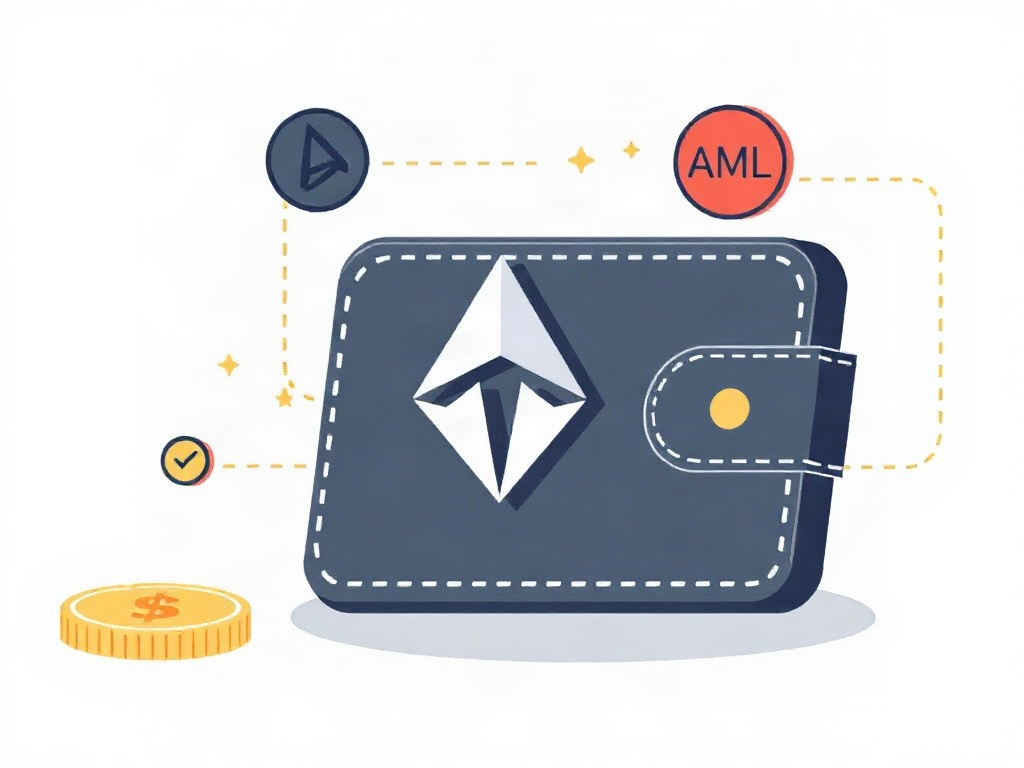
The cryptocurrency landscape has undergone a monumental shift over the past decade, transitioning from a niche technological experiment to a mainstream financial ecosystem. At the heart of this evolution lies the principle of decentralization, epitomized by hardware wallets like Trezor. These devices offer users unparalleled control over their digital assets, ensuring that private keys remain offline and secure from malicious actors. However, this paradigm of self-custody introduces a complex layer of regulatory and compliance challenges. As global authorities tighten their grip on the crypto industry, the necessity of conducting thorough due diligence has never been more critical. Understanding the nuances of AML check Trezor wallet risk exposure is essential for both individual users and institutional players navigating this intricate terrain.
While hardware wallets provide a robust defense against online hacking and theft, they do not render the assets within them invisible to the broader financial system. The blockchain is an immutable public ledger, meaning every transaction is permanently recorded and traceable. Consequently, the funds stored in a Trezor wallet carry a history, and that history can significantly impact their perceived legitimacy. When interacting with regulated exchanges or financial institutions, the origin of these funds is scrutinized. If a Trezor wallet has previously interacted with illicit addresses, the risk exposure associated with those funds escalates dramatically. This dynamic makes it imperative for users to understand how their transactional behavior influences their compliance standing in the modern financial ecosystem.
The Intersection of Hardware Wallets and Regulatory Compliance
Hardware wallets were originally designed to solve the problem of private key security, not to circumvent financial regulations. Yet, as the adoption of cryptocurrencies has surged, regulators worldwide have recognized the need to apply traditional financial safeguards to digital assets. This has created a unique intersection where the privacy-centric design of hardware wallets meets the transparency demands of Anti-Money Laundering (AML) frameworks. Navigating this intersection requires a nuanced understanding of how regulatory bodies view self-custody solutions and the inherent risks they pose to the financial system.
Why Hardware Wallets Are Not Immune to AML Scrutiny
A common misconception among cryptocurrency enthusiasts is that storing funds in a hardware wallet like Trezor provides a shield against regulatory oversight. In reality, hardware wallets are merely tools for securing private keys; they do not alter the provenance of the assets they hold. When a user transfers funds from a Trezor wallet to a centralized exchange, the exchange is legally obligated to perform its own compliance checks. If the funds have a tainted history—having passed through mixers, darknet marketplaces, or sanctioned entities—the exchange may freeze the assets or flag the account. Therefore, the security benefits of a hardware wallet do not equate to regulatory immunity.
The transparency of the blockchain means that every coin has a traceable lineage. Regulators and blockchain analytics firms utilize sophisticated tools to trace the flow of funds from their origin to their final destination. When a Trezor wallet receives funds from a high-risk source, the wallet's address is effectively tainted. This taint does not dissipate simply because the funds are moved to a hardware wallet; it persists on the blockchain. Consequently, any subsequent interaction with these funds can trigger alerts during an AML check Trezor wallet risk exposure assessment, potentially leading to the freezing of assets or legal repercussions for the wallet holder.
The Role of AML Check Trezor Wallet Risk Exposure in
 Sarah Mitchell
Blockchain Research Director
Sarah Mitchell
Blockchain Research Director
Navigating AML Check Trezor Wallet Risk Exposure in Decentralized Ecosystems
As the Blockchain Research Director at my firm, I have spent the better part of eight years navigating the complexities of distributed ledger technology, and I can confidently say that the intersection of self-custody hardware wallets and regulatory compliance presents a profound challenge. When we conduct an AML check Trezor wallet risk exposure assessment, we are fundamentally confronting the friction between absolute financial sovereignty and institutional oversight. Trezor’s architecture prioritizes user privacy and offline key storage, which inherently complicates the tracking of illicit funds. From a practical standpoint, financial institutions and Virtual Asset Service Providers must recognize that a standard AML screening often fails to capture the nuanced risk exposure of hardware wallet interactions, particularly when assets are moved across disparate networks without clear attribution.
My background in cross-chain interoperability solutions has shown me that this risk exposure is magnified when assets traverse bridges or interact with complex smart contracts. A Trezor wallet might originate from a clean, KYC-verified exchange, but once those tokens are swapped across a decentralized bridge, the AML check Trezor wallet risk exposure skyrockets due to the obfuscation of the transaction trail. Tokenomics also play a critical role here; privacy-centric tokens or liquidity pool positions can further mask the provenance of funds. Therefore, practical risk mitigation requires us to move beyond static blacklists and implement dynamic, on-chain forensic tools that evaluate the behavioral patterns of the wallet rather than just its initial funding source.
Ultimately, the evolution of our regulatory frameworks must align with the technical realities of self-custody. As an expert in smart contract security, I advocate for the integration of zero-knowledge proof mechanisms that allow users to prove compliance without sacrificing their privacy. Until such technological bridges are widely adopted, the AML check Trezor wallet risk exposure will remain a persistent hurdle for the broader crypto ecosystem. We must foster a collaborative environment where regulators, technologists, and hardware manufacturers work together to establish standardized risk assessment protocols that protect the integrity of the financial system without undermining the foundational principles of decentralization.
Navigating AML Check Trezor Wallet Risk Exposure in Decentralized Ecosystems
As the Blockchain Research Director at my firm, I have spent the better part of eight years navigating the complexities of distributed ledger technology, and I can confidently say that the intersection of self-custody hardware wallets and regulatory compliance presents a profound challenge. When we conduct an AML check Trezor wallet risk exposure assessment, we are fundamentally confronting the friction between absolute financial sovereignty and institutional oversight. Trezor’s architecture prioritizes user privacy and offline key storage, which inherently complicates the tracking of illicit funds. From a practical standpoint, financial institutions and Virtual Asset Service Providers must recognize that a standard AML screening often fails to capture the nuanced risk exposure of hardware wallet interactions, particularly when assets are moved across disparate networks without clear attribution.
My background in cross-chain interoperability solutions has shown me that this risk exposure is magnified when assets traverse bridges or interact with complex smart contracts. A Trezor wallet might originate from a clean, KYC-verified exchange, but once those tokens are swapped across a decentralized bridge, the AML check Trezor wallet risk exposure skyrockets due to the obfuscation of the transaction trail. Tokenomics also play a critical role here; privacy-centric tokens or liquidity pool positions can further mask the provenance of funds. Therefore, practical risk mitigation requires us to move beyond static blacklists and implement dynamic, on-chain forensic tools that evaluate the behavioral patterns of the wallet rather than just its initial funding source.
Ultimately, the evolution of our regulatory frameworks must align with the technical realities of self-custody. As an expert in smart contract security, I advocate for the integration of zero-knowledge proof mechanisms that allow users to prove compliance without sacrificing their privacy. Until such technological bridges are widely adopted, the AML check Trezor wallet risk exposure will remain a persistent hurdle for the broader crypto ecosystem. We must foster a collaborative environment where regulators, technologists, and hardware manufacturers work together to establish standardized risk assessment protocols that protect the integrity of the financial system without undermining the foundational principles of decentralization.