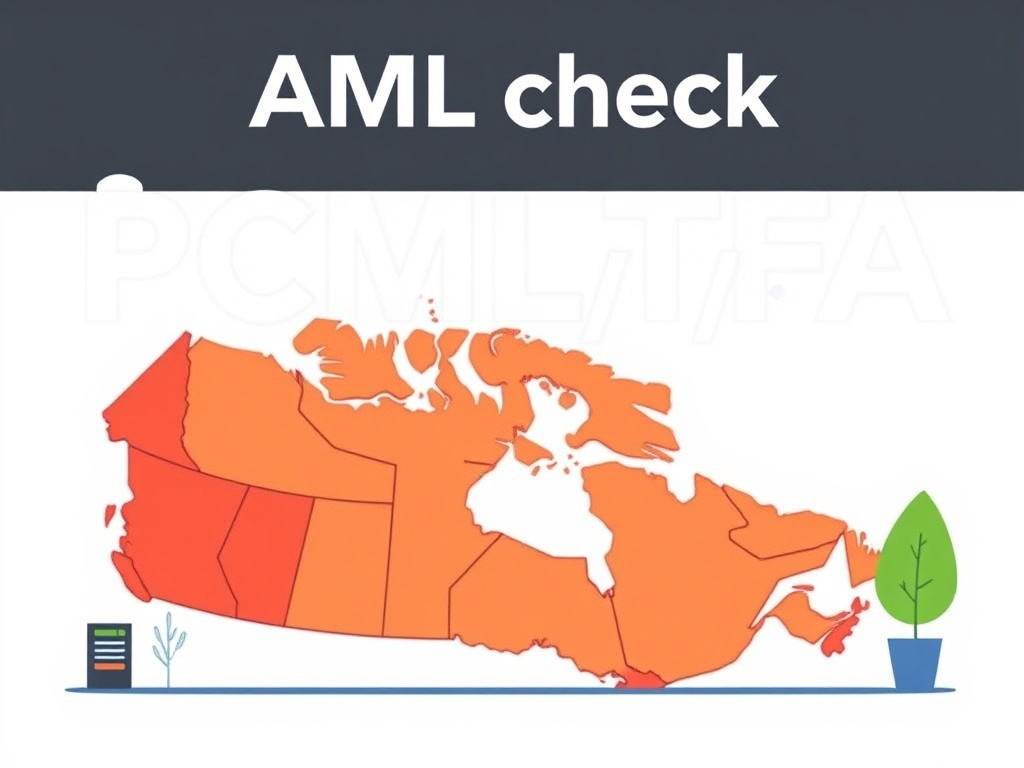
In today's regulatory landscape, businesses operating in Canada must prioritize compliance with the Proceeds of Crime (Money Laundering) and Terrorist Financing Act (PCMLTFA). One of the critical requirements under this legislation is conducting an AML check PCMLTFA Canada. This process ensures that businesses identify and mitigate risks associated with money laundering and terrorist financing activities.
This guide provides an in-depth exploration of what an AML check PCMLTFA Canada entails, why it is essential, and how businesses can implement effective compliance measures. Whether you are a financial institution, real estate broker, or any other entity subject to PCMLTFA, understanding these requirements is crucial for maintaining regulatory compliance and safeguarding your operations.
What is the PCMLTFA and Why Does It Matter?
The Proceeds of Crime (Money Laundering) and Terrorist Financing Act (PCMLTFA) is Canada's primary legislation aimed at combating money laundering and terrorist financing. Enacted in 2000 and amended several times since, the PCMLTFA imposes obligations on various entities to detect, deter, and report suspicious financial activities.
Under the PCMLTFA, businesses must implement robust Anti-Money Laundering (AML) programs, which include customer due diligence, record-keeping, and reporting suspicious transactions to the Financial Transactions and Reports Analysis Centre of Canada (FINTRAC). Failure to comply with these requirements can result in severe penalties, including fines and reputational damage.
Key Objectives of the PCMLTFA
- Prevent Money Laundering: The PCMLTFA aims to disrupt the flow of illicit funds by requiring businesses to monitor and report suspicious activities.
- Combat Terrorist Financing: The act helps prevent funds from being used to support terrorist activities by imposing strict reporting requirements.
- Enhance Transparency: By mandating record-keeping and customer identification, the PCMLTFA promotes transparency in financial transactions.
- Strengthen National Security: The legislation contributes to Canada's efforts to combat organized crime and other illicit activities.
Entities Subject to PCMLTFA
The PCMLTFA applies to a wide range of businesses, including:
- Financial institutions (banks, credit unions, trust companies)
- Money services businesses (currency exchange, remittance services)
- Real estate brokers and developers
- Accountants and accounting firms
- Lawyers and notaries
- Dealers in precious metals and stones
- Life insurance companies
If your business falls under one of these categories, you must comply with the PCMLTFA's AML requirements, including conducting an AML check PCMLTFA Canada.
The Importance of AML Checks Under PCMLTFA
An AML check PCMLTFA Canada is a critical component of a business's compliance program. It involves verifying the identity of customers, assessing their risk levels, and monitoring their transactions for suspicious activities. Conducting thorough AML checks helps businesses:
- Mitigate Financial Crime Risks: By identifying high-risk customers and transactions, businesses can prevent money laundering and terrorist financing.
- Ensure Regulatory Compliance: Compliance with PCMLTFA's AML requirements is mandatory, and failure to conduct proper checks can result in penalties.
- Protect Reputation: Businesses that fail to comply with AML regulations risk reputational damage and loss of customer trust.
- Enhance Operational Efficiency: Implementing automated AML checks can streamline compliance processes and reduce manual errors.
Types of AML Checks Required Under PCMLTFA
Under the PCMLTFA, businesses must perform several types of AML checks, including:
1. Customer Identification and Verification
Businesses must verify the identity of their customers before establishing a business relationship or conducting a transaction. This process involves collecting and verifying customer information, such as:
- Full legal name
- Date of birth
- Address
- Government-issued identification (e.g., passport, driver's license)
For corporate clients, businesses must also verify the identity of beneficial owners and senior management.
2. Risk Assessment
Businesses must assess the risk level of each customer and transaction. Factors considered in risk assessment include:
- Customer Risk: High-risk customers may include politically exposed persons (PEPs), individuals from high-risk jurisdictions, or those with unclear sources of wealth.
- Product/Service Risk: Certain products or services, such as wire transfers or cash transactions, may pose higher risks for money laundering.
- Geographic Risk: Transactions involving countries with weak AML regulations or high levels of corruption may be flagged as high-risk.
3. Ongoing Monitoring
AML checks are not a one-time process. Businesses must continuously monitor customer transactions and update their risk assessments as needed. This includes:
- Tracking unusual transaction patterns
- Reviewing customer information for changes
- Reporting suspicious transactions to FINTRAC
How to Conduct an AML Check PCMLTFA Canada
Implementing an effective AML check PCMLTFA Canada requires a structured approach. Below are the key steps businesses should follow:
Step 1: Develop an AML Compliance Program
Before conducting AML checks, businesses must establish a robust compliance program. This program should include:
- Policies and Procedures: Documented policies outlining how the business will comply with PCMLTFA requirements.
- Designated Compliance Officer: A senior individual responsible for overseeing AML compliance.
- Employee Training: Regular training sessions to ensure employees understand AML requirements and their roles in compliance.
- Independent Audit: Periodic reviews to assess the effectiveness of the AML program.
Step 2: Implement Customer Due Diligence (CDD)
Customer Due Diligence (CDD) is the foundation of an AML check PCMLTFA Canada. It involves:
- Identifying the Customer: Collecting and verifying customer information.
- Assessing Customer Risk: Determining the risk level based on factors such as customer background, transaction history, and geographic location.
- Enhanced Due Diligence (EDD): For high-risk customers, businesses must conduct additional checks, such as verifying the source of funds or obtaining senior management approval.
Step 3: Monitor Transactions and Report Suspicious Activities
Businesses must continuously monitor customer transactions for suspicious activities. Key actions include:
- Transaction Monitoring: Using automated systems to flag unusual transactions, such as large cash deposits or rapid transfers between unrelated accounts.
- Suspicious Transaction Reports (STRs): Filing reports with FINTRAC if a transaction appears suspicious.
- Record-Keeping: Maintaining records of customer identification, transactions, and risk assessments for at least five years.
Step 4: Stay Updated with Regulatory Changes
The PCMLTFA and its associated regulations are subject to frequent updates. Businesses must stay informed about changes to ensure ongoing compliance. Key resources include:
- FINTRAC Guidelines: Regular updates from FINTRAC on AML requirements.
- Government Announcements: Notifications from the Government of Canada regarding regulatory changes.
- Industry Associations: Membership in organizations that provide AML compliance resources and training.
Common Challenges in AML Checks Under PCMLTFA
While conducting an AML check PCMLTFA Canada is essential, businesses often face challenges in implementing effective compliance programs. Below are some common obstacles and how to overcome them:
Challenge 1: Balancing Compliance with Customer Experience
Businesses must ensure that AML checks do not create unnecessary friction for legitimate customers. To address this, companies can:
- Implement Risk-Based Approaches: Focus resources on high-risk customers while streamlining processes for low-risk clients.
- Use Technology: Leverage automated systems to conduct AML checks quickly and efficiently.
- Educate Customers: Inform customers about the importance of AML checks to reduce frustration.
Challenge 2: Keeping Up with Evolving Regulations
The regulatory landscape for AML in Canada is constantly evolving. Businesses must:
- Monitor Regulatory Updates: Regularly review FINTRAC guidelines and government announcements.
- Invest in Training: Ensure employees are up-to-date with the latest AML requirements.
- Engage Compliance Experts: Consult with AML specialists to navigate complex regulatory changes.
Challenge 3: Managing High Volumes of Data
Businesses subject to PCMLTFA must handle vast amounts of customer and transaction data. To manage this effectively, companies can:
- Use Data Analytics: Implement tools to analyze transaction patterns and identify suspicious activities.
- Automate Record-Keeping: Use software to store and retrieve customer records efficiently.
- Prioritize Data Security: Ensure customer data is protected from breaches and unauthorized access.
Challenge 4: Dealing with High-Risk Customers
High-risk customers, such as PEPs or individuals from high-risk jurisdictions, require additional scrutiny. Businesses should:
- Conduct Enhanced Due Diligence (EDD): Perform deeper background checks and obtain senior management approval.
- Monitor Transactions Closely: Track high-risk customers' activities more frequently.
- Implement Restrictions: Limit certain transactions or services for high-risk customers where necessary.
Best Practices for Effective AML Checks Under PCMLTFA
To ensure compliance and minimize risks, businesses should adopt the following best practices for conducting an AML check PCMLTFA Canada:
1. Implement a Risk-Based Approach
A risk-based approach allows businesses to allocate resources efficiently by focusing on high-risk customers and transactions. Key steps include:
- Risk Assessment: Evaluate each customer and transaction based on risk factors such as geographic location, customer background, and transaction type.
- Tiered Due Diligence: Apply different levels of scrutiny based on risk levels. For example, low-risk customers may require basic identification checks, while high-risk customers need enhanced due diligence.
- Regular Reviews: Update risk assessments periodically to reflect changes in customer behavior or regulatory requirements.
2. Leverage Technology for Automation
Automating AML checks can significantly improve efficiency and accuracy. Businesses should consider:
- AML Software: Use specialized software to automate customer identification, transaction monitoring, and reporting.
- AI and Machine Learning: Implement advanced analytics to detect suspicious patterns and reduce false positives.
- Integration with Existing Systems: Ensure AML tools integrate seamlessly with other business systems, such as CRM or accounting software.
3. Train Employees Regularly
Employees play a critical role in AML compliance. To ensure they are effective, businesses should:
- Provide Comprehensive Training: Cover topics such as PCMLTFA requirements, customer due diligence, and suspicious activity reporting.
- Conduct Refresher Courses: Keep employees updated on regulatory changes and emerging AML trends.
- Encourage a Culture of Compliance: Foster an environment where employees feel empowered to report suspicious activities without fear of retaliation.
4. Collaborate with Industry Peers
Collaboration with other businesses and industry associations can enhance AML compliance efforts. Consider:
- Sharing Best Practices: Participate in industry forums or working groups to learn from peers.
- Engaging with Regulators: Attend FINTRAC webinars or consultations to stay informed about regulatory expectations.
- Leveraging Third-Party Expertise: Work with AML consultants or legal experts to strengthen compliance programs.
5. Conduct Regular Audits and Reviews
Regular audits help businesses identify gaps in their AML programs and ensure ongoing compliance. Steps include:
- Internal Audits: Review AML policies, procedures, and transaction monitoring systems internally.
- External Audits: Engage third-party auditors to provide an unbiased assessment of compliance efforts.
- FINTRAC Examinations: Prepare for FINTRAC inspections by reviewing past reports and addressing any deficiencies.
Penalties for Non-Compliance with PCMLTFA AML Requirements
Failure to comply with the PCMLTFA's AML requirements can result in severe consequences for businesses. FINTRAC has the authority to impose penalties, including fines and administrative measures, for non-compliance. Below are some potential penalties:
1. Administrative Monetary Penalties (AMPs)
FINTRAC can issue AMPs for violations of the PCMLTFA. Penalties vary based on the severity of the infraction and may include:
- Minor Violations: Fines ranging from $1 to $1,000.
- Serious Violations: Fines up to $500,000 for individuals and $1,000,000 for entities.
- Repeated Violations: Higher fines for businesses with a history of non-compliance.
2. Criminal Charges
In cases of willful non-compliance or involvement in money laundering, FINTRAC may refer the matter to law enforcement for criminal prosecution. Potential consequences include:
- Fines: Up to $2,000,000 for individuals and $5,000,000 for entities.
- Imprisonment: Up to 5 years for individuals convicted of money laundering or terrorist financing.
3. Reputational Damage
Beyond financial penalties, non-compliance can harm a business's reputation. Customers, partners, and investors may lose trust in a company that fails to meet AML standards, leading to:
- Loss of business opportunities
- Difficulty attracting new customers
- Negative media coverage
4. Business Disruption
FINTRAC may impose additional measures, such as:
- Mandatory Compliance Agreements: Requiring businesses to implement specific AML measures under supervision.
- Suspension of Operations: Temporarily halting business activities until compliance issues are resolved.
To avoid these penalties, businesses must prioritize AML compliance and conduct thorough AML checks PCMLTFA Canada as part of their operations.
Future Trends in AML Compliance Under PCMLTFA
The landscape of AML compliance is continually evolving, driven by technological advancements and regulatory changes. Businesses should be aware of emerging trends that may impact their AML check PCMLTFA Canada processes:
1. Increased Use of Artificial Intelligence (AI)
AI and machine learning are transforming AML compliance by enabling businesses to:
- Detect Anomalies: AI algorithms can identify unusual transaction patterns more accurately than traditional methods.
- Reduce False Positives: Machine learning models can distinguish between legitimate and suspicious activities, reducing the burden on compliance teams.
- Enhance Predictive Analytics: AI can predict potential AML risks based on historical data and emerging trends.
2. Expansion of Digital Identity Verification
As digital transactions become more

Understanding AML Check Under PCMLTFA Canada: A Digital Assets Strategist's Perspective
As a Digital Assets Strategist with a background in traditional finance and cryptocurrency markets, I’ve closely monitored the evolution of Canada’s Proceeds of Crime (Money Laundering) and Terrorist Financing Act (PCMLTFA) and its implications for digital asset compliance. The AML check requirements under PCMLTFA Canada are not merely regulatory checkboxes—they represent a critical framework for mitigating financial crime in an increasingly digitized economy. For businesses operating in the crypto space, including exchanges, DeFi platforms, and even NFT marketplaces, conducting thorough AML checks is no longer optional; it’s a legal obligation that ensures market integrity and consumer protection. My experience in on-chain analytics has shown that robust AML screening can also serve as a competitive differentiator, fostering trust among institutional investors and retail users alike.
Practically speaking, AML checks under PCMLTFA Canada demand a multi-layered approach. First, entities must implement transaction monitoring systems capable of flagging suspicious activities, such as layering or structuring, which are common in illicit crypto flows. Second, customer due diligence (CDD) must be conducted at onboarding, with enhanced due diligence (EDD) reserved for high-risk clients or transactions. From a market microstructure perspective, this means integrating real-time blockchain forensics with traditional KYC/AML databases to create a seamless compliance workflow. Failure to comply not only risks hefty fines—up to CAD $5 million for corporations—but also reputational damage that can erode user confidence. In my view, the most forward-thinking firms will treat AML compliance as an operational asset, leveraging it to attract compliant capital and streamline cross-border transactions under Canada’s evolving regulatory landscape.