In the complex and ever-evolving landscape of anti-money laundering (AML) compliance, financial institutions and regulatory bodies must navigate a myriad of intricate rules designed to prevent illicit financial activities. Among these rules, the concept of a specific percentage threshold—most notably the 25 percent threshold—plays a pivotal role in determining the level of scrutiny applied during customer due diligence (CDD) and enhanced due diligence (EDD) processes. Understanding the nuances of this threshold is not merely a matter of regulatory compliance; it is a fundamental requirement for safeguarding an organization against financial crime, reputational damage, and severe legal penalties.
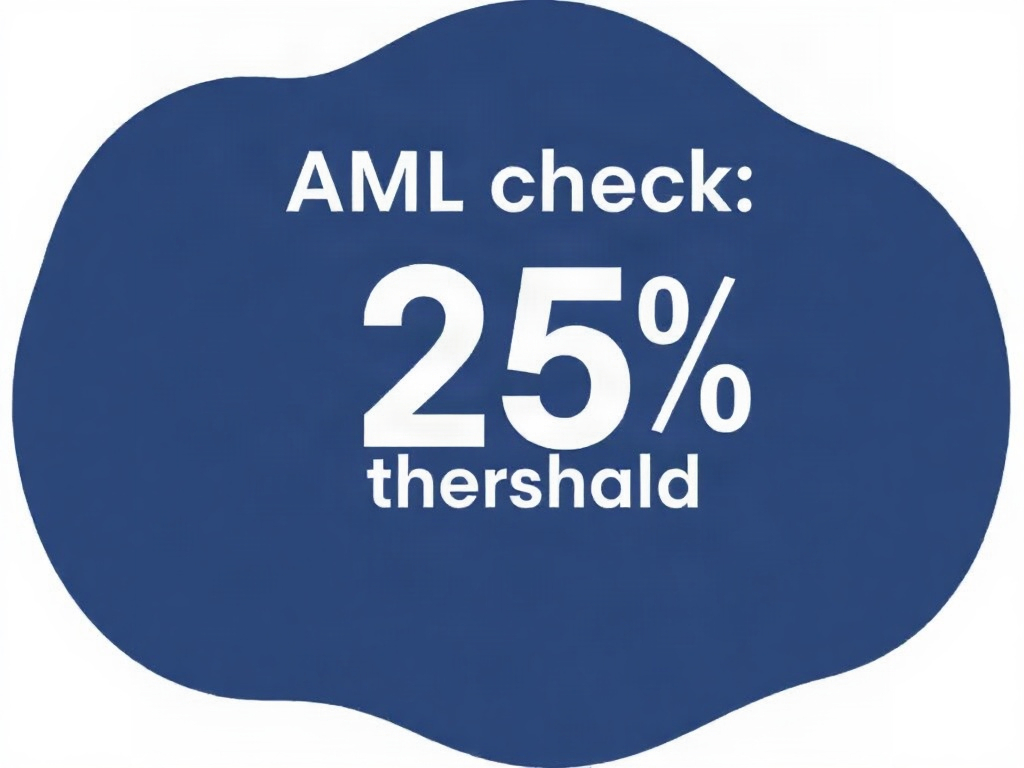
The 25 percent threshold typically acts as a critical checkpoint in AML checks, signaling when a transaction, ownership structure, or account balance crosses a level that warrants heightened attention from compliance officers. This specific benchmark is deeply embedded in global regulatory frameworks, serving as a heuristic tool to identify potential risks associated with hidden beneficial ownership, market manipulation, or systemic financial threats. As financial crimes become increasingly sophisticated, the interpretation and application of the 25 percent rule have become subjects of intense analysis and debate among legal experts, compliance professionals, and regulators alike.
The Fundamentals of AML Thresholds and the 25 Percent Benchmark
To appreciate the significance of the 25 percent threshold, one must first understand the broader context of AML checks. An AML check is a systematic review process conducted by financial institutions to verify the identities of their customers, assess the risks they pose, and monitor their transactions for signs of suspicious activity. These checks are the frontline defense in the global fight against money laundering and terrorist financing.
Defining the Scope of AML Checks
An effective AML check goes beyond simple identity verification. It involves analyzing the customer's background, business relationships, and the nature of their financial dealings. During these checks, compliance teams look for red flags that indicate potential money laundering, such as funds from high-risk jurisdictions, unexplained large cash deposits, or complex corporate structures designed to obscure the true source of wealth.
Why Percentage Thresholds Matter in AML
Percentage thresholds provide a quantifiable metric for compliance officers. Instead of relying on subjective assessments, regulators and institutions use mathematical benchmarks to standardize risk evaluation. The 25 percent threshold is particularly significant because it represents a point at which the concentration of control or ownership becomes substantial enough to suggest potential exploitation of market structures or corporate opacity. When an individual or entity crosses this 25 percent threshold, it typically triggers mandatory enhanced due diligence protocols, requiring deeper investigation into the ownership chain and the ultimate beneficiaries of the funds.
How the 25 Percent Threshold Functions in Practice
In real-world applications, the 25 percent threshold manifests in several distinct ways within the financial sector. Understanding these practical applications is essential for any institution aiming to maintain robust AML compliance programs.
Ownership and Control Concentration
One of the most common applications of the 25 percent threshold is in the assessment of corporate ownership structures. If a single individual or entity holds more than 25 percent of a company's shares or voting rights, they are considered a significant controller. Financial institutions must conduct thorough AML checks on these significant controllers to ensure they are not being used to layer funds or evade sanctions. This requires mapping the entire corporate tree, identifying any nominee directors, and verifying the ultimate beneficial owners (UBOs).
Transaction Limits and Market Manipulation
Beyond ownership, the 25 percent threshold can also apply to transaction volumes relative to a company's total assets or revenue. For instance, if a single client initiates transactions that cumulatively exceed 25 percent of a financial institution's daily transaction volume, this represents a material risk that could indicate market manipulation or a wash trade. In such cases, the AML check process escalates from standard monitoring to immediate suspension of the suspicious activity report filing, requiring the institution to freeze the account and notify the relevant financial intelligence unit.
Regulatory Frameworks Governing the 25 Percent Threshold
The application of the 25 percent threshold is not dictated by a single global standard; rather, it is interpreted differently across various jurisdictions, reflecting the diverse nature of international finance and local regulatory philosophies. However, the foundational principles remain consistent in their intent to disrupt illicit financial flows.
Global Standards: The Financial Action Task Force (FATF)
The Financial Action Task Force (FATF) provides the most widely recognized international standards for AML and counter-terrorist financing. While FATF guidelines do not explicitly mandate a 25 percent threshold, they heavily emphasize the importance of identifying and verifying significant ownership interests. The FATF Recommendation 25 specifically addresses transparency and beneficial ownership, implicitly encouraging jurisdictions to adopt thresholds—like the 25 percent mark—to trigger enhanced scrutiny. By adhering to these global standards, institutions ensure their internal policies align with international expectations, reducing the risk of regulatory sanctions.
Jurisdictional Variations and Local Implementation
Despite the global consensus, local regulators often adapt the 25 percent threshold to fit their specific economic environments. For example, in the United States, the Bank Secrecy Act (BSA) and the Corporate Transparency Act (CTA) require companies to disclose their beneficial owners, and the Internal Revenue Service (IRS) and FinCEN apply specific concentration limits. In the European Union, the Anti-Money Laundering Directives (AMLDs) mandate that member states ensure adequate transparency in corporate structures, often referencing similar percentage benchmarks for triggering EDD requirements. These variations mean that an institution operating globally must calibrate its AML checks to meet the strictest standard to ensure universal compliance.
Navigating Compliance and Best Practices
Operating effectively within the parameters of the 25 percent threshold requires more than just a superficial understanding of the rules; it demands a proactive, comprehensive approach to compliance management. Institutions must integrate this threshold into their broader risk management frameworks to avoid inadvertently violating AML regulations.
Implementing Robust Enhanced Due Diligence (EDD)
When a customer or transaction crosses the 25 percent threshold, the institution must immediately activate EDD protocols. This involves gathering additional documentation, such as incorporation papers, share transfer records, and director resolutions. The goal is to build a complete, unbroken narrative of the customer's identity and business rationale, making it difficult for bad actors to hide behind shell companies or complex trusts.
Leveraging Technology for Proactive Monitoring
In the modern digital era, manual AML checks are insufficient for managing the sheer volume of global transactions. Financial institutions are increasingly adopting RegTech solutions—software platforms that utilize artificial intelligence and machine learning to monitor transactions in real-time. These technologies can instantly flag when a customer's transaction volume or ownership stake approaches or exceeds the 25 percent threshold, allowing compliance teams to intervene before a potential breach occurs. Automated alerts reduce the latency of detection and ensure that no anomaly slips through the cracks.
Continuous Training and Cultural Alignment
Technology alone cannot guarantee compliance; human error remains a significant vulnerability. Regular training programs are essential to ensure that employees understand the implications of the 25 percent threshold and know exactly how to respond when it is triggered. A well-trained workforce acts as the final line of defense, ensuring that automated systems are interpreted correctly and that suspicious activities are reported promptly and accurately.
Common Challenges and Mitigation Strategies
Despite clear regulatory guidance,

Understanding the AML Check 25 Percent Threshold in DeFi Protocols
As a DeFi analyst, I frequently observe that compliance mechanisms in decentralized finance often lag behind innovation, particularly when it comes to Anti-Money Laundering (AML) protocols. The implementation of a 25 percent threshold for automated AML checks is a critical regulatory pivot that directly impacts how we analyze liquidity mining strategies and governance token distributions. When a single entity's stake or holdings exceed this 25 percent mark, the system automatically flags the transaction for manual review. In the context of yield farming and liquidity provision, this means that large depositors—often institutional or high-net-worth actors—trigger immediate scrutiny, which can disrupt the seamless operation of automated market makers and liquidity pools.
From a practical standpoint, this threshold creates significant friction in high-frequency trading and large-scale liquidity provision. For governance token holders participating in voting or proposing changes, crossing the 25 percent AML check line can result in transaction delays or fund freezes while compliance teams conduct due diligence. This is especially problematic during periods of high volatility or large token emissions, where rapid capital deployment can easily spike a wallet's concentration above the limit. Analysts must account for these compliance bottlenecks when modeling yield strategies, as unexpected delays or rejections can erode potential returns and damage protocol liquidity.
To mitigate these risks, protocol developers must integrate dynamic compliance thresholds rather than relying on static limits. Implementing tiered AML checks—where smaller stakes bypass automated scrutiny but larger stakes trigger enhanced monitoring—can preserve the efficiency of DeFi while satisfying regulatory requirements. For investors and analysts, understanding the operational boundaries set by the 25 percent rule is essential for risk management. We must balance the open, permissionless nature of Web3 with the necessary safeguards against illicit financial flows, ensuring that our yield farming and governance participation remain both profitable and compliant.