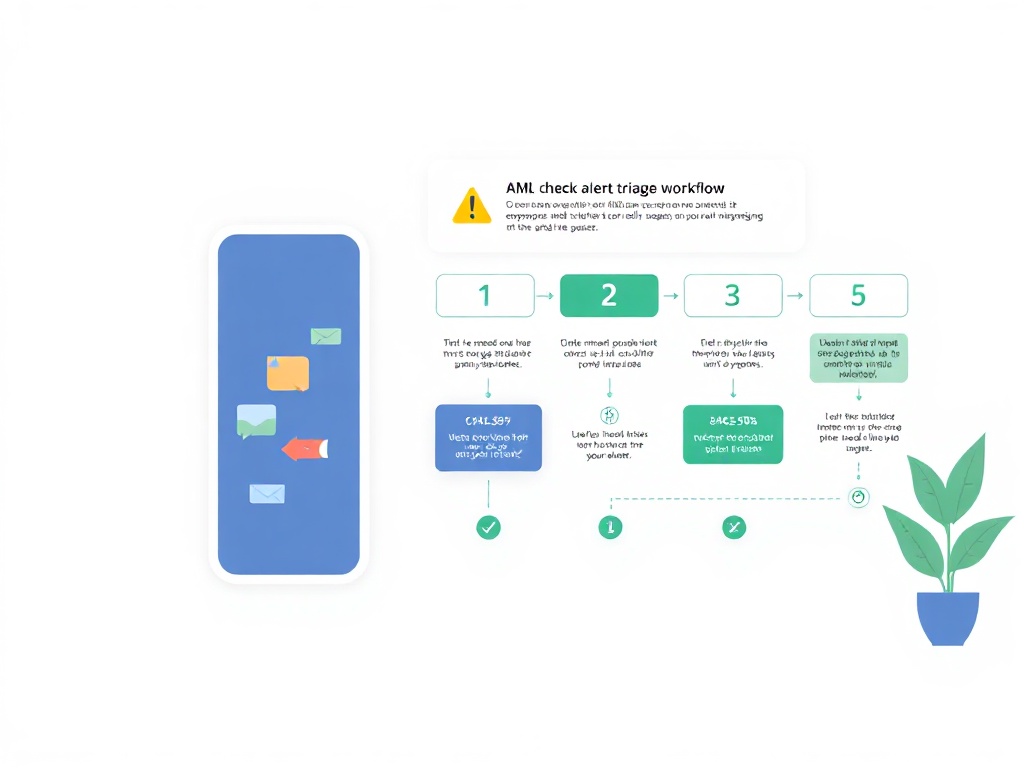
In the rapidly evolving landscape of financial crime prevention, the AML check common input ownership heuristic has emerged as a pivotal technique for identifying concealed relationships between cryptocurrency transactions and traditional fiat movements. As regulators tighten scrutiny on digital asset flows, compliance teams are increasingly required to differentiate between ordinary wallet activity and coordinated attempts to obscure fund origins. This heuristic operates on a straightforward yet powerful premise: when multiple inputs in a transaction share a common ownership history, the likelihood of a unified control structure rises significantly. By systematically flagging such patterns, AML professionals can prioritize investigations, reduce false-negative rates, and maintain alignment with global anti-money laundering standards. The following exploration delves into the mechanics, applications, and strategic considerations of this approach within contemporary compliance frameworks.
At its core, the input ownership heuristic relies on the analysis of transaction graphs to infer control. In a typical blockchain transaction, a sender allocates funds across one or more outputs while drawing from one or more previous outputs (inputs). When two or more inputs in a single transaction originate from the same address—or from addresses that share a common clustering pattern—the heuristic registers a "common ownership" signal. This signal does not, by itself, constitute evidence of illicit activity; rather, it serves as a risk multiplier. When combined with other AML indicators such as structuring patterns, high-velocity transfers, or interactions with known illicit addresses, the common input ownership flag can trigger enhanced due diligence or automated Suspicious Activity Report (SAR) generation.
The Fundamentals of Input Ownership Heuristics in AML Contexts
What Is the Input Ownership Heuristic?
The input ownership heuristic is a rule-based analytical method used primarily in blockchain forensics and transaction monitoring systems. Its primary function is to identify when multiple spending inputs in a transaction are controlled by the same entity. This control can manifest through direct address ownership, shared jurisdiction within a hierarchical deterministic (HD) wallet, or coordinated activity across a cluster of addresses managed by a single service provider or exchange. By mapping these relationships, AML systems can construct a more accurate picture of fund flow dynamics, which is essential for tracing the provenance of assets and detecting attempts at layering or integration.
Historical Roots in Financial Forensics
Long before the advent of distributed ledger technology, financial investigators relied on analogous concepts in traditional banking. The practice of clustering accounts based on shared signatories, joint ownership structures, or recurring transaction patterns mirrors the input ownership heuristic. In the pre-digital era, such clustering was performed manually through ledger review and cross-referencing of signature cards. The transition to automated systems in the 1990s and 2000s introduced algorithmic clustering, but the underlying logic remained consistent: entities that act together often share observable traits. The blockchain adaptation of this logic represents a natural evolution, leveraging the transparent, immutable nature of distributed ledgers to achieve real-time clustering at scale.
Core Mechanisms of the Heuristic
Technically, the heuristic examines the input set of a given transaction. If Input A and Input B both point to addresses that belong to the same cluster—determined by prior transaction analysis, address labeling, or known exchange hot wallets—the system records a match. The strength of the match often depends on the recency of the shared ownership, the volume of funds involved, and the presence of intermediate addresses designed to break the trail. Advanced implementations employ machine learning models to weight these factors, adjusting the threshold for flagging based on historical risk data and emerging typologies.
Integrating the AML Check Common Input Ownership Heuristic into Transaction Screening Workflows
How AML Systems Leverage Input Clustering
Modern AML platforms integrate the common input ownership heuristic as a layer within their broader transaction screening engine. When a new transaction is broadcast or detected on-chain, the system automatically parses its inputs, queries an address clustering database, and evaluates ownership overlap. If a match is found, the transaction is assigned a higher risk score, which may trigger downstream processes such as enhanced customer due diligence (CDD), source-of-funds verification, or real-time blocking. This integration is particularly valuable in crypto-asset markets, where the pseudonymous nature of addresses can otherwise obscure beneficial ownership.
Distinguishing Legitimate from Suspicious Patterns
Not every transaction exhibiting common input ownership warrants alarm. Legitimate use cases abound: a user consolidating dust outputs from a long-held wallet, a merchant pooling customer funds before settlement, or a custodial service moving assets between its own cold and hot storage. The art of AML analytics lies in differentiating these benign patterns from those indicative of money laundering. For instance, a single large transaction with two inputs from the same exchange wallet is routine; however, a series of micro-transactions across numerous addresses, all feeding into a single output shortly before conversion to fiat, may signal structuring or smurfing. AML analysts are trained to evaluate the broader context, including transaction velocity, counterparty risk, and geographic red flags.
Data Requirements for Effective Heuristic Activation
For the common input ownership heuristic to function accurately, AML systems require access to high-quality, comprehensive data. This includes not only the raw transaction data from multiple blockchains but also enriched metadata such as address labels, entity classifications, and historical ownership trails. Many compliance teams partner with specialized blockchain analytics firms that maintain proprietary clustering models and risk scores. Additionally, integration with traditional financial crime databases—such as those containing known sanctions lists, politically exposed persons (PEPs), and prior SAR filings—enables a more holistic risk assessment when the heuristic raises a flag.
Technical Implementation and Best Practices for AML Professionals
Configuring Heuristic Thresholds for Optimal Sensitivity
One of the most critical decisions in implementing the AML check common input ownership heuristic is setting the appropriate sensitivity threshold. A threshold that is too low generates an overwhelming volume of false positives, overwhelming analysts and diminishing the efficiency of the compliance function. Conversely, a threshold that is too high risks missing subtle but meaningful ownership connections. Best practice involves a phased rollout: beginning with conservative thresholds, monitoring false-positive rates, and iteratively adjusting based on analyst feedback and evolving typologies. Many organizations employ a tiered approach, where initial flags trigger automated review, and persistent patterns escalate to manual investigation.
Integration with Rule-Based and Machine Learning Systems
The heuristic does not operate in isolation. Effective AML programs combine it with rule-based logic and machine learning models to create a defense-in-depth architecture. Rule-based systems might enforce hard constraints, such as "flag any transaction with three or more inputs from addresses on a known illicit list." Machine learning models, meanwhile, can detect complex, non-linear patterns that static rules cannot capture. For example, a model might identify that certain clusters of common input ownership are disproportionately associated with mixing services or darknet marketplaces, even when individual transactions appear unremarkable. The synergy between these technologies enhances both detection accuracy and operational efficiency.
Mitigating Privacy-Preserving Countermeasures
Adversaries aware of the input ownership heuristic employ various techniques to obfuscate ownership ties. These include the use of CoinJoin and other privacy-enhancing protocols, routing funds through multiple intermediate addresses (often called "peeling chains"), and leveraging cross-chain bridges to break on-chain continuity. AML professionals must remain vigilant, updating their clustering models and heuristic parameters to account for these evasion tactics. Collaboration with industry consortia, such as the Crypto Currency Certification Consortium (C4) and the Global Digital Finance (GDF) framework, facilitates the sharing of emerging threat intelligence and defensive strategies.
Common Pitfalls and Mitigation Strategies in Heuristic-Driven AML
Over-Clustering and User Privacy Concerns
A frequent challenge in deploying the common input ownership heuristic is the risk of over-clustering, where distinct users are incorrectly grouped under a single ownership assumption. This can violate privacy expectations and lead to discriminatory monitoring practices. To mitigate this, AML systems should incorporate address attribution logic that distinguishes between genuine shared ownership (e.g., joint accounts, business entities) and mere transactional proximity. Regular audits of clustering algorithms, coupled with transparency reports for customers, help maintain the balance between effective compliance and respect for legitimate privacy.
Transaction Volume vs. Ownership Signals
Another common pitfall is the misinterpretation of high transaction volume as evidence of ownership. A single exchange, for instance, may process millions of transactions daily from thousands of unique users. Applying the heuristic without volume normalization can result in a deluge of false positives. Best practice involves normalizing ownership signals by transaction count, unique address count, and time windows. This contextual weighting ensures that the heuristic responds to meaningful patterns rather than noise inherent in high-throughput environments.
False Negatives in Decentralized and Anonymous Networks
In decentralized finance (DeFi) protocols and anonymous networks, the lack of centralized address labeling can diminish the heuristic's effectiveness. Inputs may be drawn from liquidity pools, smart contract wallets, or mixer contracts that intentionally obscure ownership. AML professionals addressing this gap often supplement the heuristic with behavioral analytics, such as monitoring for unusual swap patterns, sudden large withdrawals, or interactions with known high-risk protocols. A multi-faceted approach, combining on-chain heuristics with off-chain intelligence, provides the most robust defense against evolving money laundering techniques.
Future Trends: Adaptive Heuristics, AI, and Regulatory Evolution
Adaptive Heuristics in Real-Time Monitoring
The next generation of AML systems is moving toward adaptive heuristics that learn and adjust in real time. Rather than static thresholds, these systems employ feedback loops where analyst decisions on flagged transactions are fed back into the model, continuously refining the ownership detection algorithm. This dynamic capability ensures that the system evolves alongside money launderers' tactics, reducing the lag between emerging typologies and detection. Real-time adaptation is particularly critical in fast-moving markets like crypto, where transactions settle in seconds and manual review is often impractical.
Artificial Intelligence and Deep Learning Integration
Artificial intelligence (AI) and deep learning techniques are

Understanding AML Check Common Input Ownership Heuristic in Digital Asset Compliance
As a quantitative analyst bridging traditional finance and cryptocurrency markets, I've observed that the AML check common input ownership heuristic represents one of the most fundamental yet frequently misunderstood compliance tools in our industry. This heuristic operates on the principle that when multiple outputs from a transaction share common inputs, they likely belong to the same entity or control framework. From a mathematical and on-chain analytics perspective, this creates a powerful clustering mechanism that allows compliance teams to trace fund flows beyond simple address-to-address transactions. The heuristic's strength lies in its ability to reveal hidden relationships between wallets that would otherwise appear unrelated in standard transaction monitoring systems.
However, practical implementation requires nuanced understanding of its limitations and edge cases. In my work with portfolio optimization and market microstructure analysis, I've seen how this heuristic can generate both valuable insights and false positives if applied without context. The common input ownership model assumes that entities control all inputs to a transaction, but this doesn't account for scenarios like change addresses, mixer interactions, or legitimate multi-signature wallet structures. A sophisticated digital assets strategist must layer this heuristic with other on-chain metrics—such as transaction velocity, volume patterns, and behavioral analytics—to distinguish between genuine entity control and technical transaction mechanics.
For practitioners navigating AML compliance in digital asset markets, I recommend treating the common input ownership heuristic as a starting point for investigation rather than a definitive conclusion. The most effective compliance frameworks integrate this tool within a broader analytical ecosystem that includes behavioral modeling, geographic risk assessment, and contextual understanding of specific wallet types. By acknowledging both the heuristic's analytical power and its inherent limitations, we can build more robust compliance systems that protect institutional participants while supporting the healthy growth of the digital asset ecosystem.