In the rapidly evolving landscape of financial crime prevention, staying aligned with regulatory expectations is not merely a legal obligation—it is a strategic imperative. The AML check EBA guidelines serve as a cornerstone for credit institutions, investment firms, and payment service providers operating within the European Union. Issued by the European Banking Authority, these guidelines provide a harmonized framework designed to mitigate money laundering risks, enhance customer due diligence, and strengthen overall transaction monitoring capabilities. For compliance officers, risk managers, and senior leadership, a deep understanding of the AML check EBA guidelines is essential to foster a culture of integrity, avoid costly supervisory sanctions, and maintain the trust of stakeholders and clients alike.
This article offers a detailed exploration of the structural, procedural, and technological dimensions of the AML check EBA guidelines. By unpacking the regulatory rationale, breaking down core compliance components, and illustrating practical implementation strategies, we aim to equip financial professionals with the knowledge needed to translate guidance into actionable risk management practices.
The Regulatory Framework Behind AML check EBA guidelines
Evolution of AML Standards in the EU
The European Union has long recognized the necessity of a unified approach to combating money laundering and terrorist financing. From the early directives of the 1990s to the comprehensive overhaul introduced by the Fifth Anti-Money Laundering Directive (AMLD5) and beyond, the legislative trajectory has been marked by increasing specificity and stricter enforcement mechanisms. The AML check EBA guidelines emerged as a pivotal interpretative instrument, translating broad statutory obligations into concrete operational standards that banks and financial entities must follow. This evolution reflects a shift from reactive compliance to proactive risk prevention, emphasizing the identification of beneficial owners, the monitoring of unusual patterns, and the reporting of suspicious activities in near real-time.
EBA’s Mandate and Supervisory Role
The European Banking Authority operates as an independent EU body tasked with strengthening the stability and integrity of the European banking sector. Unlike a direct regulator, the EBA does not issue binding legislation; rather, it develops binding technical standards (BTS) and guidelines that national competent authorities (NCAs) are expected to adopt and enforce. The AML check EBA guidelines fall within this mandate, providing a common reference point that ensures consistency across jurisdictions such as Germany, France, Italy, and the Netherlands. By aligning national supervisory practices with EBA guidance, the authority reduces regulatory arbitrage and enhances the effectiveness of cross-border supervision.
Furthermore, the EBA’s periodic review cycles mean that the AML check EBA guidelines are not static. They evolve in response to emerging threats—such as the rise of cryptocurrency-based money laundering, the exploitation of legal persons in offshore jurisdictions, and the increasing sophistication of cyber-enabled financial crime. Institutions that treat the guidelines as a one-time checklist risk non-compliance as new amendments and interpretive notes are released. A dynamic, continuously updated compliance framework is therefore essential.
Core Elements of an Effective AML Check Process
Customer Due Diligence Requirements
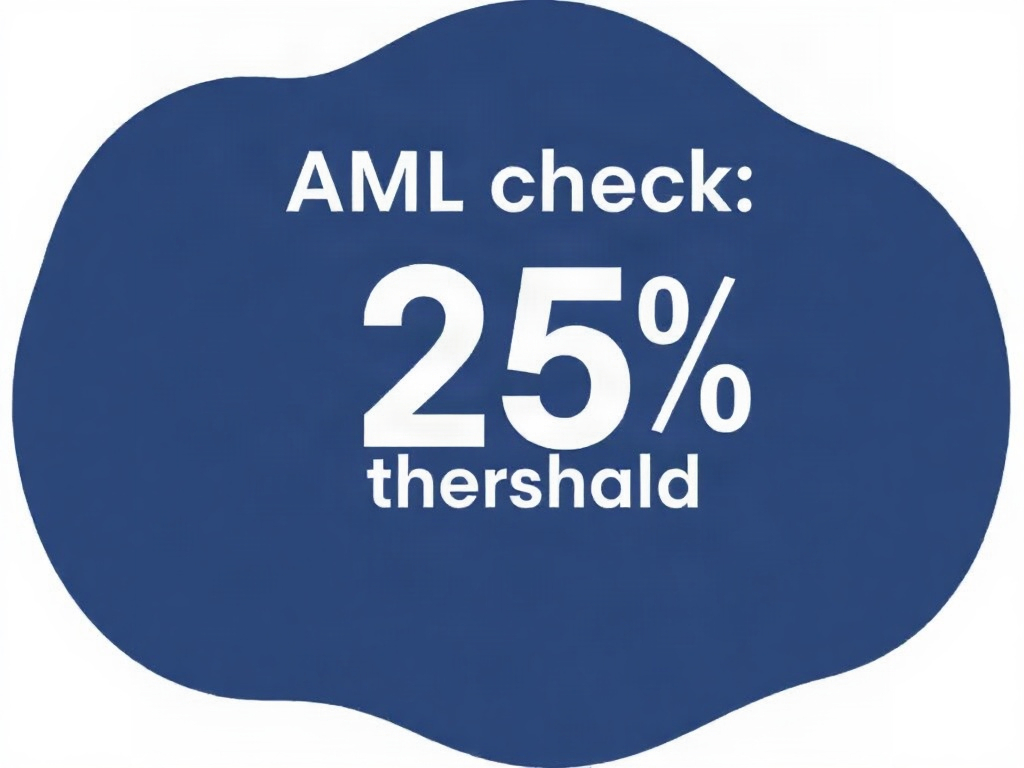
At the heart of the AML check EBA guidelines lies a rigorous approach to customer due diligence (CDD). The guidelines stipulate that financial institutions must implement proportionate measures to identify and verify the identity of customers, particularly those classified as high-risk. This includes obtaining satisfactory evidence of identity, understanding the purpose and intended nature of the business relationship, and conducting ongoing monitoring of the customer’s transactional behavior. For legal persons and arrangements, the guidelines require the identification of beneficial owners holding more than 25% of the capital or voting rights, with enhanced scrutiny for structures that obscure ultimate ownership.
The AML check EBA guidelines also emphasize a risk-based approach (RBA). Rather than applying identical scrutiny to all customers, institutions are encouraged to categorize clients based on factors such as geography, product type, and transaction volume. Low-risk customers may benefit from simplified due diligence, while high-risk profiles—such as politically exposed persons (PEPs), shell companies, or entities from high-risk jurisdictions—demand enhanced due diligence (EDD). This tiered methodology not only optimizes resource allocation but also ensures that the most vulnerable areas of the business receive the highest level of oversight.
Transaction Monitoring and Risk Scoring
Beyond initial customer onboarding, the AML check EBA guidelines place significant emphasis on the continuous monitoring of transactions. Effective transaction monitoring systems must be capable of detecting patterns indicative of money laundering, such as structuring (breaking large sums into smaller deposits), rapid movement of funds across multiple accounts, or transactions that lack a clear economic rationale. The guidelines advocate for the use of risk-scoring models that assign a probability of illicit activity to each transaction, triggering automated alerts when predefined thresholds are exceeded.
Integration of rule-based systems and machine learning algorithms is strongly encouraged under the AML check EBA guidelines. These technologies enable the analysis of vast data sets in real-time, reducing the reliance on manual reviews and improving the timeliness of suspicious activity reports (SARs). However, the guidelines caution against over-reliance on automation without robust governance frameworks. Human expertise remains indispensable for interpreting alerts, assessing context, and ensuring that false positives are minimized without compromising the detection of genuine threats.
Implementing AML check EBA guidelines in Daily Operations
Technology Integration and Automated Screening
The practical application of the AML check EBA guidelines requires a strategic blend of technology, policy, and people. In today’s digital banking environment, automated screening solutions form the first line of defense. These systems cross-reference customer data against global watchlists, politically exposed person databases, and sanction lists maintained by the United Nations, European Union, and national governments. The AML check EBA guidelines specify that such screenings must be performed at onboarding, periodically throughout the customer lifecycle, and whenever a material change in circumstances is detected.
Moreover, the guidelines advocate for the integration of knowledge graphs and graph analytics to uncover hidden connections between entities. For instance, if a seemingly unrelated series of transactions between two companies reveals a shared beneficial owner, the system can flag this for further investigation. Institutions that invest in interoper

Navigating AML check EBA guidelines in the DeFi Landscape: Practical Insights for Web3 Stakeholders
As a DeFi and Web3 analyst, I've observed that the recent emphasis on AML check EBA guidelines represents a pivotal moment for the industry. The European Banking Authority's framework, traditionally rooted in centralized banking infrastructure, is increasingly being referenced by regulators seeking to extend oversight into decentralized protocols. While the immutable and pseudonymous nature of blockchain networks poses unique compliance challenges, the EBA's risk-based approach offers a useful scaffold for designing on-chain monitoring systems that respect both regulatory intent and the ethos of decentralization.
Practically, I advise DeFi projects to move beyond checkbox compliance and integrate AML check EBA guidelines into their operational DNA through layered risk assessment. This means leveraging on-chain transaction analytics, wallet screening tools, and real-time monitoring solutions that can flag suspicious activity without compromising user privacy or network efficiency. Moreover, governance structures should explicitly consider these guidelines when voting on protocol upgrades, treasury management, or partner integrations, ensuring that compliance is a shared responsibility rather than a siloed function.
Looking ahead, the convergence of traditional finance oversight and Web3 innovation will depend on adaptive frameworks that can evolve alongside technological advancements. As analysts, our role is to translate the technical nuances of AML check EBA guidelines into actionable strategies that protect investors, sustain protocol integrity, and foster responsible growth. The protocols that succeed will be those that treat compliance not as a regulatory burden, but as a strategic advantage in building long-term trust.